Component 2

Blue Deal Partnership in Mozambique meets in Maputo to plan its future direction

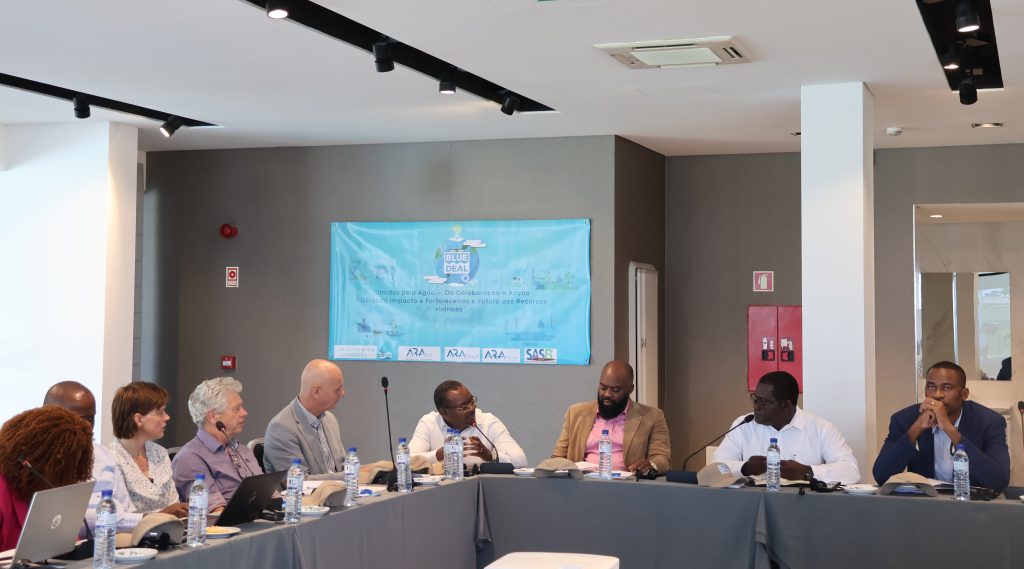
In November of this year, the Blue Deal Partnership held a strategic meeting in Maputo to analyse the programme's new organisational structure and discuss the 2026 annual plan. This meeting was a continuation of the consultation process that began in the middle of the year regarding the programme's restructuring and improvement of its efficiency.

A new organisational setup

During the meeting, the partnership reviewed a new organisational structure designed to work on specific “tracks”. The aim of this reorganisation is to make the focus clearer, improve the alignment between all partners, and optimise how activities are coordinated in the future.

The 2026 annual plan

A preliminary version of the 2026 plan was presented and discussed. Under the new "tracks" framework, most of the activities proposed for the upcoming year are direct continuations of initiatives started by the partnership in previous years.

Partnership introspection and cooperation

The partnership meeting served as a moment of reflection on the program's results. It was agreed that the component leaders ( DWA representatives) will continue to work closely with the Mozambican water management entities to identify areas of success and areas for improvement within the programme.

The meeting also provided an opportunity to strengthen the ties between the Blue Deal and other Dutch interventions in water resources management in Mozambique.

Mr Ivo Van Haren, the representative from the Embassy of the Netherlands, attended the meeting and provided an update on the planned actions of the Dutch Commission for Environmental Assessment (NCEA) in Mozambique. This was an important announcement for the water sector, as some of the Commission's actions aim to improve environmental impact assessments and reduce pollution at the Chicamba dam caused by gold mining — an issue that the Blue Deal partnership has been addressing for a few years.

Ensuring Regular Dialogue

The partnership meeting in November reinforced the need for constant consultation with local partners in order to assess progress, gather suggestions for improvement, and ensure better implementation of the programme.

The Blue Deal programme organises these partnership meetings regularly to ensure transparency and consistent progress. The event in November follows one held in June of this year. Further strategic meetings are planned for the upcoming year to monitor the implementation of activities scheduled for 2026.

Share this article

Blue Deal Programme Office visits Beira and Maputo to collaborate with SASB and participate in the 8th REMCO conference

A delegation from the Blue Deal Program Office in The Hague and Dutch Water Authorities (DWA) visited Mozambique last November. The team, comprising Marieke van Nood (Blue Deal Programme Director), Martin Bos (Blue Deal Mozambique Partnership Director), Jan den Besten (Hunze en Aas), and Ytzen Faber (Wetterskip Fryslan), went to Beira to see how working with the Autonomous Sanitation Service of Beira (SASB) was going and to take part in the REMCO Conference, where important discussions about transboundary water management took place.

Partnering with SASB for financial sustainability

A part of the mission in Beira focused on discussing the financial future of the SASB. The discussion covered a wide array of topics in this regard, such as the increase in operational costs as new infrastructure becomes operational, the strong push towards professionalisation through good governance and the establishment of a new regulatory framework. These are just a few of the actions that would lead SASB in becoming a sustainable company.

Decentralizing the sanitation chain

The Blue Deal, DWA, and SASB teams also looked at the really important issue of decentralised sanitation in Beira.

A survey done in May 2025 showed that 65% of sludge lacks proper treatment.

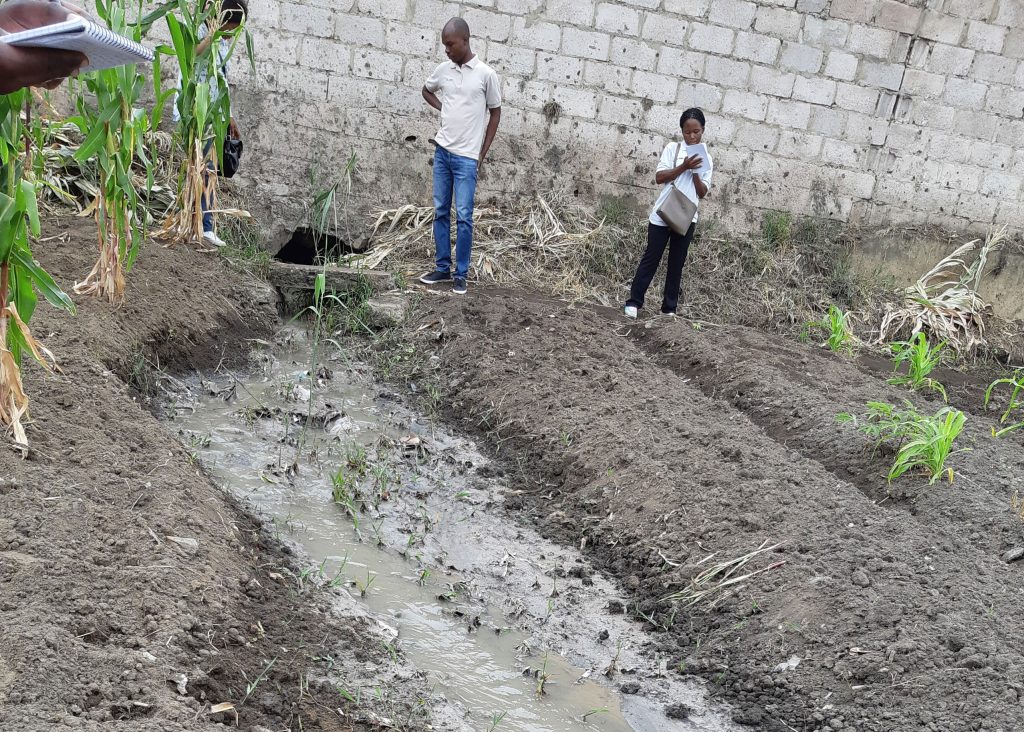
To combat this environmental and health hazard, the partnership is launching a subsidy pilot project (by the FACE Association). The plan is to improve the sanitation chain by giving the city residents a reason to properly empty latrine pits and make sure the sludge is put in the right places, which are run by SASB.

Canal cleaning and infrastructure expansion

Flood prevention remains a top priority for the city of Beira, and currently 20-metre-wide canals are being constructed to improve the city's drainage.

At the SASB premises, the delegation planned the yearly drainage canal cleaning operation. The Blue Deal has been providing support to SASB (and FACE) on this matter for a few years and will continue to do so.

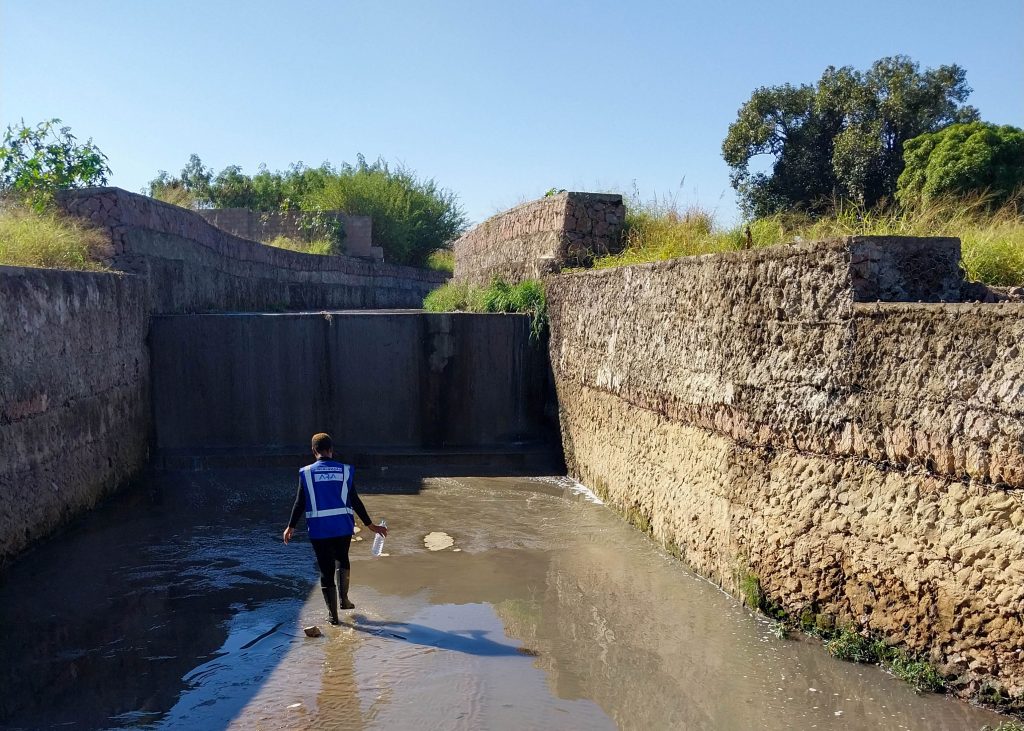
During the visit in November, the team explored alternative solutions to combat the rapid regrowth of vegetation, including the possibilities of using a mowing boat for the maintenance of the (new) retention basins and possibly also for the wider canals.

REMCO 2025

The mission concluded in Maputo with the REMCO 2025 conference, held from November 3 to 7.

As is customary, this year's conference – hosted by ARA Sul,IP and supported by three Blue Deal partnerships (Mozambique, South Africa and Eswatini) – focused on transboundary water management cooperation between these three countries.

Approximately 200 attendees were present, including representatives from the Blue Deal Office at Hague and Blue Deal delegations from Ethiopia, Mozambique, Eswatini, South Africa, Germany and partner organisations in the field of water management.

The Mozambican partnership was represented at the event by the aforementioned DWA representatives and Marijke Jaarsma (Waterschap Vallei en Veluwe), who moderated two sessions: one on digital cooperation among riparian states and one on the Blue Deal programme and African partnerships.

The conference concluded with a field visit, during which participants had the opportunity to learn more about the efforts of REPENSAR, an organisation developing several environmental conservation actions in the Maputo Basin.

***

The mission effectively connected operational improvements on the ground in Beira with high-level strategic discussions in Maputo.

The visit to Beira and Maputo provided a valuable opportunity for key personnel to meet in person and share their wide-ranging experiences. From the programme director to representatives from the Blue Deal partnerships and other entities, both cities were viewed as places offering valuable and memorable experience.

Share this article

Protecting water quality in the Buzi and Pungwe river basins

In August 2025, a team of experts from the Dutch Water Authorities (DWA) returned to Mozambique to continue their work on improving water quality and enforcement. This mission was part of Component 2 of the Blue Deal programme, which focuses on water quality, licensing and enforcement of effluent discharge. The main purpose of this visit was to address the urgent challenges posed by gold mining in central Mozambique.

Approaching an old problem through local collaboration

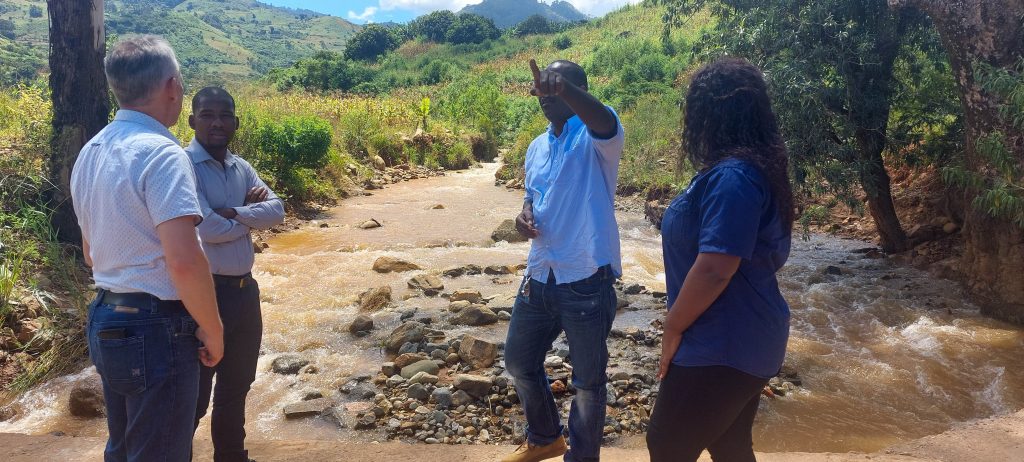
A central theme of this visit was the ongoing collaboration aimed at mitigating the environmental impact of gold mining in the Buzi and Pungwe river basins. This initiative is part of a long-term strategy involving the DWA, ARA-Centro,IP, and many other stakeholders.

Under the Blue Deal, the cooperation to address this issue began in 2023 with an initial meeting that brought together government entities, universities and mining companies. This was followed by a second major meeting in 2024, which led to the establishment of a dedicated “Gold Mining Taskforce” in the first half of 2025.

During the last visit in August, two meetings were held in Chimoio (ARA-Centro Buzi Division) and Gorongosa (ARA-Centro Pungwe Division), which brought these stakeholders together again.

Moving from planning to action

The focus has now shifted decisively from strategic meetings to practical actions. The “Gold Mining Taskforce is nurturing and implementing its action plan to regulate mining activities and protect water quality, especially in the Buzi river basin where the situation is alarming. To ensure continued coordination among all local stakeholders, ARA-Centro will temporarily take the lead in the group's operational activities.

Licensing and enforcement as tools for environmental defence

One of the key takeaways from previous missions and workshops was the critical role of effluent discharge licensing in environmental management. The DWA team continues to emphasize that a license is not just an administrative fee, but a powerful regulatory tool that can contribute to minimize the environmental impact of gold mining.

Field visits to mining sites in Manica in August highlighted the difference this could make. While some operators are investing in water recycling and environmental safety measures, others are lagging behind. By implementing strict licensing and enforcement measures, ARA-Centro can encourage the industry to be aware of the environmental impact of their businesses, thereby ensuring that economic gains do not compromise surface water quality.

Building capacity for the future

Beyond the “gold mining” topic, the visit also focused on institutional development. In both Tete (ARA-Centro,IP) and Nampula (ARA-Norte), the team developed 5-year plans to make water quality laboratories more professional, with a focus on staffing, budgeting and ISO compliance.

The Blue Deal will continue to support the ARAs in implementing these plans to provide clean and safe water.

Share this article

Dutch water experts visit Mozambique for continued cooperation on water quality management

In April 2025, a delegation of water quality experts visited Mozambique to continue collaborating on water quality subjects under the Blue Deal partnership. During this mission, Oscar van Zanten, Eva Ruiter, and Jan van de Graaf focused on several key goals.

The delegation evaluated the progress of the water quality blended learning approach. They also looked at the introduction of innovative practices for water quality testing. Finally, they discussed the implementation of water quality management regulations.

Expanding water quality knowledge through blended learning

In previous years, the Blue Deal partnership introduced an e-learning course on water quality monitoring. This working visit served as an opportunity to evaluate the first phase of the online course and launch its second phase. The course has now been expanded to include a new module on aquatic ecosystems and biodiversity, and a final test. A personalised certificate is automatically generated if the student answers more than 70% of the questions correctly.

The full e-learning course can be found here in english and here in portuguese.

During the visit to ARA-Sul,IP in Maputo and ARA-Centro,IP in Tete, a short introductory course on ecology supported the introduction of the second phase of blended learning - an approach that is contributing to the development of a strong base of technical capacity within the ARAs. During a meeting with Bernabé Fondo (Freshwater Program Manager) and Antonio Serra (Landscape designer) of the World Wide Fund for Nature ( WWF), the e-learning course was also introduced to them. They responded very enthusiastically and will use the e-learning course to train WWF staff.

Introducing innovative techniques for water quality monitoring

A further goal for this visit was to test new tools for water quality monitoring in the field.

As part of ongoing efforts, in the last quarter of 2024, the Dutch Water Authorities ( DWA) provided ARA- Centro, IP with simple, low-cost handheld meters. During a field trip to the Zambezi River, ARA-Centro, IP used these devices to assess their usability in combination with the smartphone app Aquality. Further information can be found here.

With many monitoring sites located in remote areas and poor road access in the country, transporting water samples for analysis is often impractical. Limited laboratory capacity exacerbates this problem. In these cases, portable hand-held meters can provide reliable readings and provide an effective alternative for collecting data in addition to the laboratory analyses.

Wastewater discharge and the polluter pays principle

In Maputo, the Dutch team met with teams from ARA Sul, IP andDNGRH. Discussions with these two organisations focused on the implementation of Decree 52/2023, which regulates water quality standards and wastewater discharge. Technical inspections and pilot enforcement actions by ARA- Sul, IP have shown that there are challenges in applying this regulation, especially the polluter pays principle. This calls for urgent discussions between the ARAs and the DNGRH on this issue and a possible revision of the decree.

DNGRH is working on a proposal for water tariffs and has requested DWA to give more support. The new proposal will then be submitted to the Cabinet.

Strengthening water data management

The visit also covered water data management, with a particular focus on the development of SNIRH (National System of Information on National Water Resources) and the implementation of HydroNET. Further discussions on data management and visualisation will be conducted and harmonised between the different themes within the partnership.

Other activities related to water quality

As part of the Water Quality component, the Blue Deal Mozambique is working to address water pollution from gold mining in the Buzi and Pungwe river basins. Since 2023, stakeholder meetings have been organised to facilitate collaboration between ARA Centro and other government agencies, farmers, and miners. These discussions have led to the ongoing development of an action plan, focused on licensing companies and monitoring wastewater discharge, raising mining operators' awareness, and strengthening the integrated multisectoral management of the Buzi and Pungwe river basins. We're planning to keep working on this issue with a working visit and a live stakeholder meeting in August this year. 

Share this article

Licensing & enforcing wastewater discharge to improve water quality in Mozambique

In recent years, wastewater discharge and its impact on water quality has been an ongoing concern for the ARAs and other environmental organisations in Mozambique. Through the Blue Deal partnership, a significant breakthrough was achieved when representatives of key organisations - ARAs (Mozambique's Water Management Agencies), DNGRH (National Directorate of Water Resources Management), MTA (Ministry of Land and Environment) and AQUA (Agency for Environmental Quality Control) - came together in a series of online and live meetings to discuss this issue.

The collaborative effort resulted in the finalisation and approval of a comprehensive checklist and guidelines for the licensing of effluent discharge at the beginning of 2024. This is a crucial step in the ongoing mission of improving water quality in Mozambique through effective regulation and enforcement of wastewater discharge.

Pilot licensing of effluent discharge

Following the approval of these critical tools, the focus in 2024 has shifted toward the validation and implementation phase. The ARAs are now engaged in pilot projects to validate the usability of these tools and foster institutional collaboration.

The ongoing efforts of the ARAs and other stakeholders also demonstrate a commitment to continue developing innovative strategies to further improve the licensing process and shorten the time taken.

Increasing cooperation and collaboration

The checklist and guidelines are essential tools for improving collaboration and cooperation between the ARAs and the organizations involved in the licensing and enforcement processes. By clearly outlining the steps and requirements for wastewater discharge, it's expected that these tools make the regulatory process more efficient. Collectively, these organisations are not only improving the capacity for effective enforcement but also driving a meaningful impact on improving water quality in Mozambique.

Share this article

Finding new ways to monitor water quality in Mozambique

The growing demand for drinking water and the need to preserve water resources makes water quality a critical issue in Mozambique.

The vast areas under management by the Regional Water Authorities (ARAs) and limited access to technology and resources make traditional water quality monitoring methods both impractical and expensive. To address this issue, the Blue Deal partnership in Mozambique is working with ARA-Centro,IP on finding innovative methods and tools for water quality monitoring.

New Approaches to Water Quality Measurement

The pressing need for simple, cost-effective, and user-friendly tools that can provide accurate data, demands skipping intermediate steps and adopting the latest, most efficient, technologies directly. For water quality measurement, this could mean moving from expensive laboratory equipment to mobile-based solutions to perform analyses, thus transforming how water quality is monitored, and enabling more frequent and widespread testing even in remote areas.

Portable Water Quality Labs

A promising idea in this work is the development of a "Portable Water Quality Lab". This kit would include various sensors and analogue test strips that can measure complex substances such as nitrate and phosphate. This concept leverages smartphone technology to read and interpret these tests, making it accessible and easy for anyone to use, regardless of their technical expertise.

Correctness and Precision

When evaluating mobile-based water quality tests, two critical performance features are “correctness” and “precision”. Correctness refers to how closely the measured values align with the actual concentrations of substances, while precision indicates the consistency of the results across multiple tests.

Ensuring that the tests are both accurate and reliable is essential in adopting effective tools for water quality monitoring.

Innovative Products and Technologies

Several products and technologies have emerged as potential solutions for mobile-based water quality measurement such as Deltares Aquality App, AKVO Caddisfly, AQUON Laboratories, FFEM, CyanoLakes, MQuant StripScan, and SAM-1 Smart Aquameter.

The Deltares Aquality App has been tested in the Netherlands and Mozambique, demonstrating promising results for the easy and quick measurement of nitrate, salt levels, mineral nitrogen, ammonium, and phosphate concentrations. For the Blue Deal Mozambique, it would be interesting to test two other products: the MQuant Stripscan and SAM-1 Smart Aquameter. Both products offer convenience, accuracy, and ease of use.

Continuous research and innovation

Ongoing research is exploring the capabilities of smartphones for water quality analysis. Several scientific studies and organizations are exploring the possibilities provided by smartphone-based systems for water quality analysis and its reliability, such as the Technical University of Delft and the University of Leiden.

Embracing these new ways of monitoring can empower the ARAs and other water professionals to proactively monitor water quality, make informed decisions, and contribute to the preservation of water in Mozambique. In 2024 our partnership will continue exploring this topic and a working visit is planned for Q3 to continue working with ARA Centro, IP on this subject.

Share this article

Tackling gold mining issues in the Buzi and Pungwe Basins

The Buzi and Pungwe basins in Mozambique are facing several problems, largely due to gold mining activities. The impact of these activities has resulted in water pollution caused by the improper treatment and discharge of wastewater from gold mining. This issue became a major concern for ARA-Centro,IP and environmental organisations working in the central region of Mozambique.

An old problem

For several decades, the border of Mozambique and Zimbabwe has been known for gold mining. The increase in mining activity in the region has led to an increase in the illegal discharge of wastewater, resulting in water pollution. Gold mining in this area is associated with negative impacts on water management, public health, the environment, and other spheres.

Licensing and Enforcement of effluent discharge to reduce water pollution

Effective water quality management is essential to ensure adequate sanitation and access to clean water by the local community. As the organisation responsible for water quality management in the region, ARA Centro started to tackle the gold mining challenges in the Buzi and Pungwe basins.

Under the Blue Deal partnership, ARA Centro is starting to work on licensing the gold mining companies in the central region of Mozambique for wastewater discharge. This work is starting within the Buzi basin and will be extended to the Pungwe basin after favourable results are achieved.

Increased awareness among businesses and the Government

ARA Centro’s intervention is focused on raising awareness among gold mining companies on licensing requirements and best practices for wastewater discharge. In addition to these actions, there is also a strong interest in raising discussions concerning this topic at the highest level of Mozambique’s government to not only end illegal wastewater discharges and improve water quality but also fight back against all the other socio-economic and environmental problems related to gold mining in the region.

Stakeholder Meetings

In 2023, a live meeting was organized by the Blue Deal partnership to streamline a project plan and collect inputs from several stakeholders, including private companies in the region, to address the gold mining issue. This year, the activity is continuing with additional online and live stakeholder meetings, an inventory of mining companies in the area, and the development of a water quality monitoring plan by ARA Centro.

While the challenges associated with gold mining activities in the Buzi and Pungwe basins are old, the current collaborative intervention between ARA Centro and other private and public entities provides hope for a sustainable solution.

Share this article

Licensing and enforcement of discharges in relation to Water Quality (component 2)

For the Blue Deal Mozambique, Robert Boonstra and Bert Jager are working on licensing and enforcement of discharges. These topics are part of Component 2 of the Blue Deal Partnership, concerning water quality.

In April we held a first Skype meeting with our Mozambican colleagues to discuss the ideas for the pilots at the 3 ARAs. We are now several consultations further and have defined almost all the pilot areas. The next step is to conduct research into the licensing and enforcement of discharges and their effect in the pilot areas.

The purpose of this is to get an image of the current local situation, where things are going well, and if there are gaps in knowledge, cooperation or implementation. If there are gaps on a local scale we expect them also for the whole area of the ARA. It is expected that there will be a lack of cooperation and knowledge sharing between the various governmental organizations. These opportunities to improve will be presented in the planned workshop in November 2021. This workshop will also be attended by other governmental organizations. During this workshop, we will make a start for a strategic action plan for improvement.

Share this article