Component 1

Strengthening ARAs Strategy and Operations in Mozambique

In November 2025, a team from the Dutch Water Authorities (DWA) concluded a working visit to Mozambique. Led by Lucas-Jan Hooijkaas and Henriët Bremer, the mission focused on strengthening the organisational backbone of the regional water authoritiesARA-Centro,IP and ARA Norte, by helping them to achieve financial sustainability and improve their internal processes.

A compass for the future

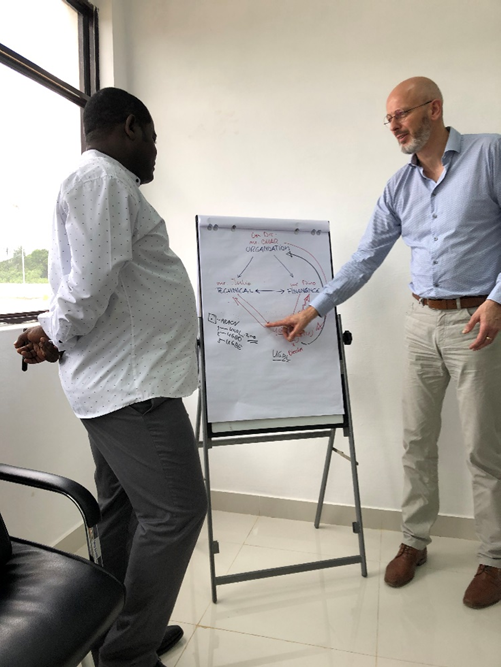
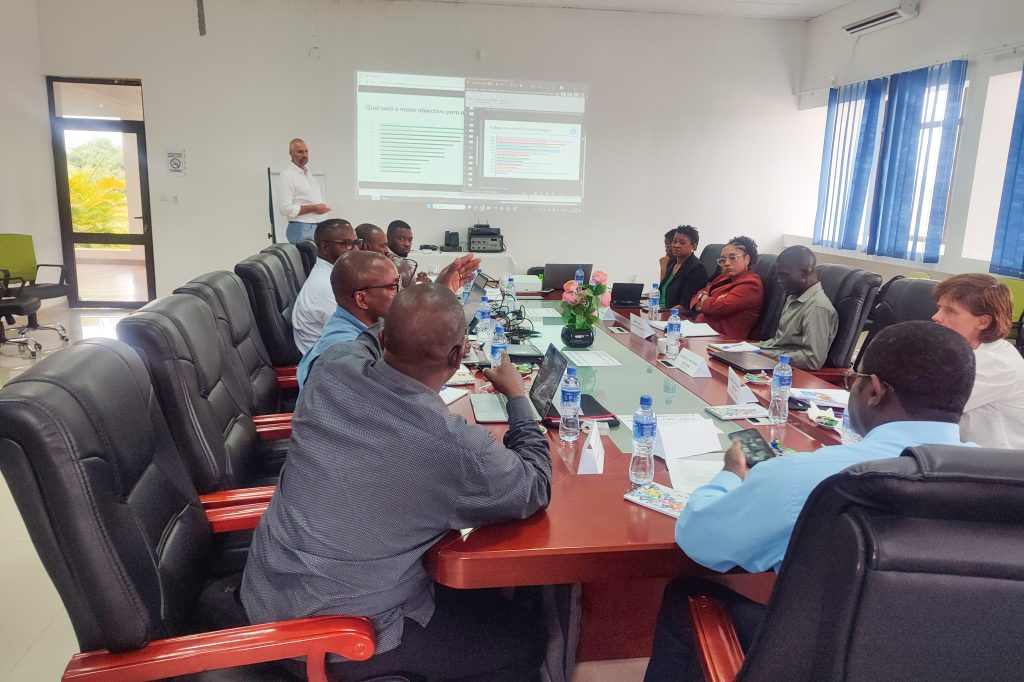
A key part of the mission involved collecting information to finalise a strategic plan for ARA-Norte. During a workshop, the DWA team and ARA Norte reviewed their SWOT analysis and identified key activities to prioritise in the coming years.

The development of a strategic plan is vital for ARA-Norte as it will ensure consistency in decision-making and align all departments towards common goals. This approach transforms complex challenges into manageable, prioritized actions, ensuring long-term growth and sustainability.

Stepping toward digital efficiency

At ARA-Centro, the DWA team looked at ways to modernise operations by improving document management and ICT. With physical archives suffering from space constraints and security risks, the move toward digitalization is critical.

During the visit, the team identified and described the key processes involved in generating and managing critical documents.

By securing data and streamlining how information flows, ARA-Centro will be able to build an organization that can withstand physical disasters and improve daily collaboration.

Strengthening the financial backbone

Beyond the November mission, the partnership made significant progress throughout the year by promoting professional development and cooperation between different ARAs and departments.

In October, as a continuation of the efforts initiated in Phase 1, ARA Sul professionals participated in Primavera ERP system training. Using a 'learning by doing' approach, the training focused on the practical implementation of the current stage of the decentralised financial system. This activity has enhanced the team's confidence and their ability to execute complex financial operations, ensuring the decentralisation strategy is put into practice.

In addition, an important knowledge exchange on financial management took place between ARA-Centro and ARA-Sul in September. This interchange was designed to help ARA-Centro select the most suitable bookkeeping system for their needs. Through discussions, the teams explored the practicalities of the software used by ARA Sul, as well as how to organise financial information according to cost centre and cost unit principles.

Building sustainable institutions

Together, these steps, ranging from strategic planning and digitalization to robust financial management, demonstrate the Blue Deal’s commitment to building resilient organizations. By strengthening these internal pillars, the DWA and the ARAs are building a solid foundation for sustainable and efficient water management across Mozambique.
Share this article

Blue Deal Partnership in Mozambique meets in Maputo to plan its future direction

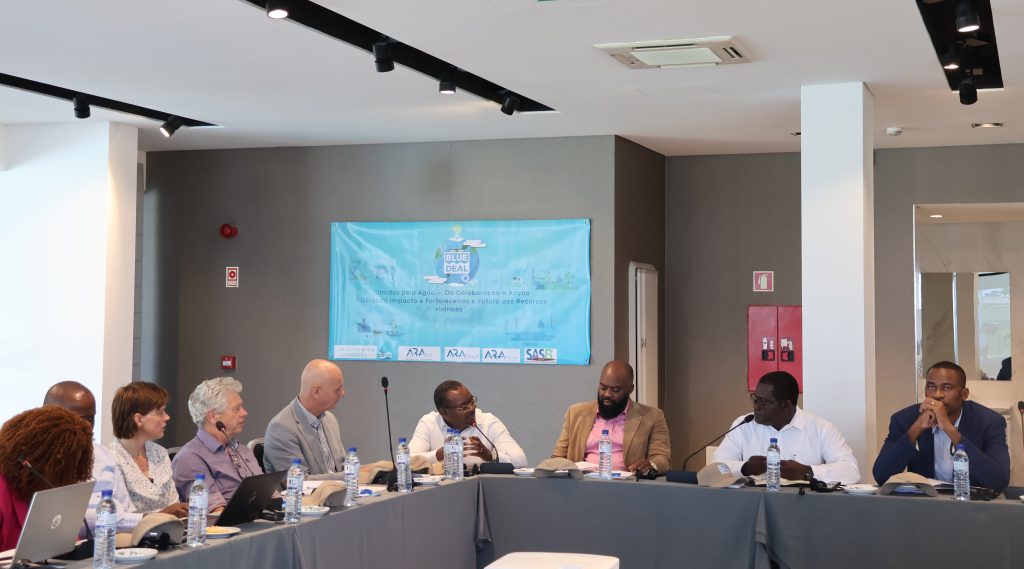
In November of this year, the Blue Deal Partnership held a strategic meeting in Maputo to analyse the programme's new organisational structure and discuss the 2026 annual plan. This meeting was a continuation of the consultation process that began in the middle of the year regarding the programme's restructuring and improvement of its efficiency.

A new organisational setup

During the meeting, the partnership reviewed a new organisational structure designed to work on specific “tracks”. The aim of this reorganisation is to make the focus clearer, improve the alignment between all partners, and optimise how activities are coordinated in the future.

The 2026 annual plan

A preliminary version of the 2026 plan was presented and discussed. Under the new "tracks" framework, most of the activities proposed for the upcoming year are direct continuations of initiatives started by the partnership in previous years.

Partnership introspection and cooperation

The partnership meeting served as a moment of reflection on the program's results. It was agreed that the component leaders ( DWA representatives) will continue to work closely with the Mozambican water management entities to identify areas of success and areas for improvement within the programme.

The meeting also provided an opportunity to strengthen the ties between the Blue Deal and other Dutch interventions in water resources management in Mozambique.

Mr Ivo Van Haren, the representative from the Embassy of the Netherlands, attended the meeting and provided an update on the planned actions of the Dutch Commission for Environmental Assessment (NCEA) in Mozambique. This was an important announcement for the water sector, as some of the Commission's actions aim to improve environmental impact assessments and reduce pollution at the Chicamba dam caused by gold mining — an issue that the Blue Deal partnership has been addressing for a few years.

Ensuring Regular Dialogue

The partnership meeting in November reinforced the need for constant consultation with local partners in order to assess progress, gather suggestions for improvement, and ensure better implementation of the programme.

The Blue Deal programme organises these partnership meetings regularly to ensure transparency and consistent progress. The event in November follows one held in June of this year. Further strategic meetings are planned for the upcoming year to monitor the implementation of activities scheduled for 2026.

Share this article

Blue Deal Programme Office visits Beira and Maputo to collaborate with SASB and participate in the 8th REMCO conference

A delegation from the Blue Deal Program Office in The Hague and Dutch Water Authorities (DWA) visited Mozambique last November. The team, comprising Marieke van Nood (Blue Deal Programme Director), Martin Bos (Blue Deal Mozambique Partnership Director), Jan den Besten (Hunze en Aas), and Ytzen Faber (Wetterskip Fryslan), went to Beira to see how working with the Autonomous Sanitation Service of Beira (SASB) was going and to take part in the REMCO Conference, where important discussions about transboundary water management took place.

Partnering with SASB for financial sustainability

A part of the mission in Beira focused on discussing the financial future of the SASB. The discussion covered a wide array of topics in this regard, such as the increase in operational costs as new infrastructure becomes operational, the strong push towards professionalisation through good governance and the establishment of a new regulatory framework. These are just a few of the actions that would lead SASB in becoming a sustainable company.

Decentralizing the sanitation chain

The Blue Deal, DWA, and SASB teams also looked at the really important issue of decentralised sanitation in Beira.

A survey done in May 2025 showed that 65% of sludge lacks proper treatment.

To combat this environmental and health hazard, the partnership is launching a subsidy pilot project (by the FACE Association). The plan is to improve the sanitation chain by giving the city residents a reason to properly empty latrine pits and make sure the sludge is put in the right places, which are run by SASB.

Canal cleaning and infrastructure expansion

Flood prevention remains a top priority for the city of Beira, and currently 20-metre-wide canals are being constructed to improve the city's drainage.

At the SASB premises, the delegation planned the yearly drainage canal cleaning operation. The Blue Deal has been providing support to SASB (and FACE) on this matter for a few years and will continue to do so.

During the visit in November, the team explored alternative solutions to combat the rapid regrowth of vegetation, including the possibilities of using a mowing boat for the maintenance of the (new) retention basins and possibly also for the wider canals.

REMCO 2025

The mission concluded in Maputo with the REMCO 2025 conference, held from November 3 to 7.

As is customary, this year's conference – hosted by ARA Sul,IP and supported by three Blue Deal partnerships (Mozambique, South Africa and Eswatini) – focused on transboundary water management cooperation between these three countries.

Approximately 200 attendees were present, including representatives from the Blue Deal Office at Hague and Blue Deal delegations from Ethiopia, Mozambique, Eswatini, South Africa, Germany and partner organisations in the field of water management.

The Mozambican partnership was represented at the event by the aforementioned DWA representatives and Marijke Jaarsma (Waterschap Vallei en Veluwe), who moderated two sessions: one on digital cooperation among riparian states and one on the Blue Deal programme and African partnerships.

The conference concluded with a field visit, during which participants had the opportunity to learn more about the efforts of REPENSAR, an organisation developing several environmental conservation actions in the Maputo Basin.

***

The mission effectively connected operational improvements on the ground in Beira with high-level strategic discussions in Maputo.

The visit to Beira and Maputo provided a valuable opportunity for key personnel to meet in person and share their wide-ranging experiences. From the programme director to representatives from the Blue Deal partnerships and other entities, both cities were viewed as places offering valuable and memorable experience.

Share this article

ARAs, DNGRH, and DWA meet to enhance communication strategies and skills

Effective water resource management encompasses more than just infrastructure management. Transparency, sensitization, and building trust with the people who rely on these vital resources are equally important. As part of their ongoing commitment to fostering stronger relationships with water users, the Regional Water Authorities (ARAs) of Mozambique have been carrying out a wide range of communication activities.

These activities, supported by the Blue Deal Mozambique, aim to transform the way the ARAs present themselves to the public, ensuring their image accurately reflects the critical work being carried out.

Continuously learning together

At the heart of the Blue Deal's communication efforts is an active Community of Practice (CoP), which brings together communication professionals from the three ARAs (and now also the DNGRH) for regular online meetings to share insights about their ongoing and planned activities. In July of this year, the group met in person, in Maputo, to continue sharing experiences and developing their skills.

The live meeting addressed the theoretical and practical challenges of communication in Mozambique's public sector. This prompted the CoP to discuss the role of communication in mergers and crises, how bureaucracy can affect creativity, and to explore strategies for carrying out communication activities on a low budget.

The gathering also served as a practical workshop, in which CoP members participated in a short media training session focusing on interview techniques. They also engaged in practical sessions covering foundational photography techniques and the use of artificial intelligence for content generation.

On the final day of the CoP gathering in July, the CoP visited one of the major water users to discuss groundwater usage and the polluter pays principle.

Building skills in multimedia content creation

In October, following the July meeting in Maputo, one of ARA-Sul's communications experts led an in-depth multimedia training session for  ARA-Norte,IP and  ARA-Centro,IP. Equipped with new skills in graphic design, video editing and photography, these two ARAs are now better able to create content explaining licensing procedures, providing real-time flood warnings and educating the public on water conservation.

Looking Ahead

The ARAs are fostering a culture of transparency and openness, whether by engaging in face-to-face dialogue with major water users or launching communication campaigns for the wider community. The Blue Deal partnership in Mozambique will continue these critical actions, building and maintaining strong and active relations between water managers and water users.

Share this article

Innovating planning & control

In Nampula, ARA Centro-Norte is innovating the planning & control cycle. In 2020, the ARA is gaining experience with a system approach of “traffic light (red-yellow-green)” to indicate the progress on the operational action plan that was developed in 2019. ARA Centro-Norte is gaining also new experience with a more detailed financial estimate for the year 2020. "We welcome a more sustainable grip on finances." Said Director Carlitos Omar.

“Traffic light approach” creates overview

In January 2020, ARA Centro-Norte in Nampula adopted an approach of traffic lights (red-yellow-green). For an easy overview, the system indicates the progress of each subject in the action plan for planning & control. The new approach was introduced by experts Taco Mulder and Geert Room. To make it workable, they discussed all the details of the action plan with Mr Carlitos Omar and with the managers of the technical department, the financial department, the human resources department and the procurement/legal department.

A more detailed estimate

ARA Centro-Norte is also gaining experience with a more detailed annual financial estimate. Geert Room: “When developing the annual budget we used inputs from the national budget, the expenses made by the ARA during 2019, the costs for operation & maintenance and the own (tax) income of ARA Centro-Norte”. The estimate was further detailed by the mentioned staff, including Mrs Adelgisa, a financial controller financed through the Blue Deal partnership.

Next working visit

Geert Room expects a next working visit in the second half of 2020. “We hope to be able to monitor the development and implementation of the annual budget and have a look at the progress of the operational action plan. But only if we are allowed to visit Mozambique and not to be stopped because of the Covid-19 pandemic measures” - said Gert Room.

Share this article

Development of a strategic plan at ARA Centro Norte

From 26 to 30 August 2019, we had a full week workshop at ARA Centro Norte in Nampula, with all heads of the departments and other staff members” - Said Carlitos Omar, ARA Norte General Director.We discussed a lot about planning and control topics and we made some very important steps from our strategic plan towards an operational action plan. We also defined the outcomes and outputs of our new action plan“.

The Blue Deal effect: As Carlitos Omar mentioned: “it was very interesting to learn that with the help of the colours green, yellow and red of a traffic light we can easily and simply visualize the progress of our actions and tasks“.

The road to positive outcomes: During the workshop, we discussed and emphasized that an important element of our daily work is based on: "say what you do, and do as you say“.

Share this article