Author name: bdadmin

Training on emergency repair of fluvial dikes (component 4)

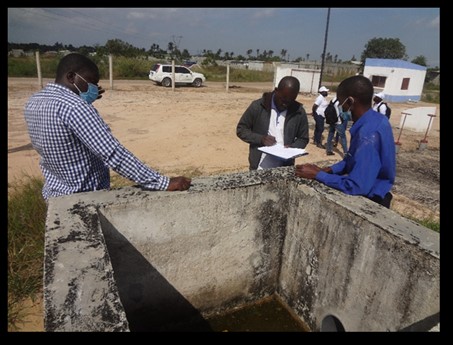
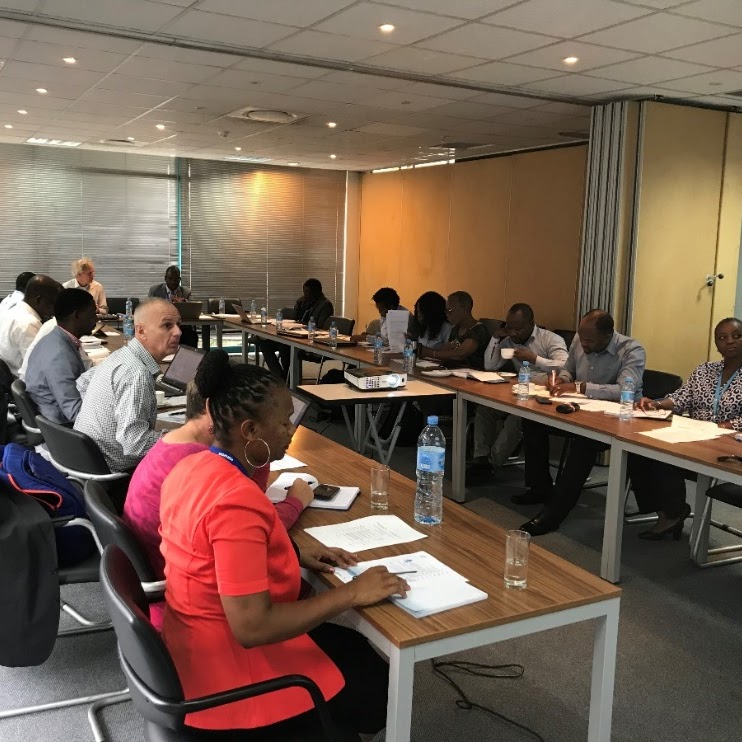
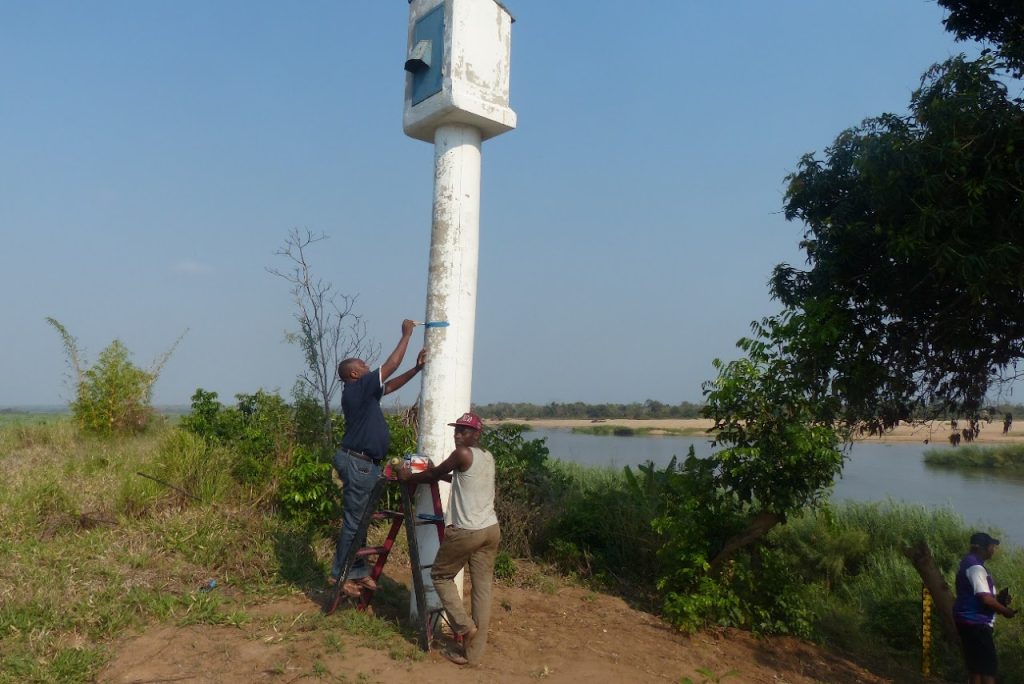
A training on emergency repair of fluvial dikes took place in Bilene, Gaza Province between 14 and 21 of June 2021.

A consultant from Técnica Engenheiros Consultores prepared and facilitated the training sessions and a topographer, and two lab technicians joined the group for the last 3 days of the training. 13 staff from ARA Sul main office and staff from all basin management units attended the training.

Not all participants were familiar with dike repairs or were involved with hydraulic work on a daily basis. For future activities, it was agreed that a smaller group will be targeted to allow those working daily with dikes and hydraulic works will have a more tailored knowledge transfer.

Share this article

Feacal Sludge Transfer Station (ETLF) in Beira (component 5)

The feacal sludge transfer station (ETLF) became active in June 2020, with a supporting team present in the field. The team consists of a manager and two technicians of SASB. NGO FACE's technical team was involved in the opening process of ETLF providing assistance, after the opening of the station the team was connected in the day-to-day operational work.

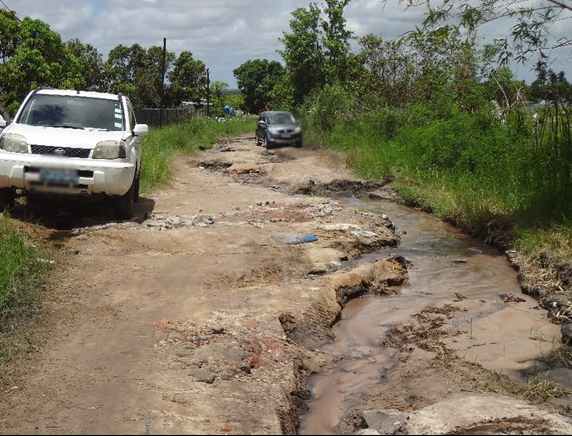
During the rainy season, specifically the second season, January to March 2021, the station was closed and unable to offer its services to suction companies. During this period Beira was hit by the severe tropical storm Chalane, which passed through the city on December 19, 2020 causing heavy rainfall reaching about 100mm in 24-hour period. In the following month, on January 14, 2021, another tropical cyclone, Eloise, struck the city with high rainfall of 200 to 300 mm in 24 hours, 500 mm in 48 hours, causing flooding and other destruction to roads and infrastructures. The access road to the station was affected, which made it impossible for cars and motorcycles to get to the station. Due to the circumstances, the ETLF station had to be closed.

Early June 2021 the current situation of the ETLF was assessed by FACE. The main findings were: There is a need for a piped water supply for personal hygiene (bathroom) and cleaning materials. There is also a need for an electrical connection for more safety at night and for guarding purposes to prevent sabotage and theft of stored materials. It became also clear that the intake boxes of the septic tank need to be slightly reconstructed in order to improve the disposal process of collected sludge from the cars. It should also prevent the solid waste in the sludge from entering the septic tank. And at last, there is a need for paving the truck manoeuvring circuit to minimize erosion.

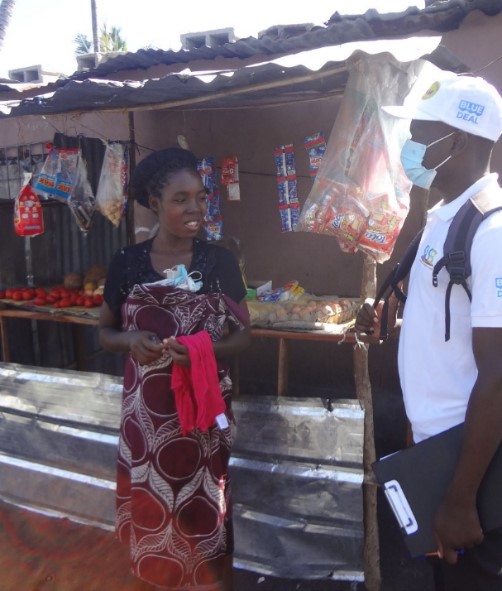
In the Inhamizua district, the assistance team is executing door-to-door visits disseminating the ETFL activities and promoting the work of suction companies.

In May 2021, 231 households were visited and in July about 1,792 door-to-door household visits were made: from the total number of visits made in the two months, 11% of households sought the services of septic tanks’ suction.

Share this article

Improvement of the operation and management of Beira’s drainage system

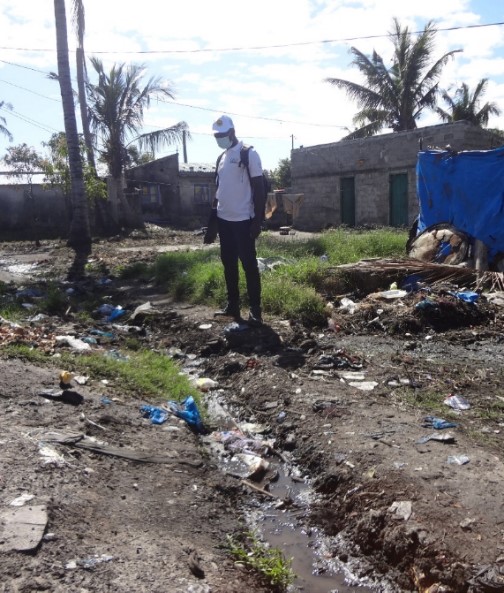
The Blue Deal is supporting the city of Beira with the improvement of the operation and management conditions of the drainage canal system through capacity building of the urban services managing entity SASB. This is partly implemented via community awareness campaigns for people living in the direct neighbourhood of the canals: awareness of solid waste management (posture, supervision, control committees, sanitation-hygiene-covid-19) and the correct use of solid waste containers.

During May 2021 1242 families were visited. It was observed that 24% of them are living within 100 meters of where garbage container is placed.

Within component 5 field teams are implementing activities. In partnership with SASB, training and education of field teams took place at the SASB offices. The training aimed at making the field teams aware of the fieldwork procedures, the challenges and objectives of conducting door-to-door visits and campaigning in general. The training in which the staff of SASB was also present was received very positively. The field teams received working equipment from FACE.

Special attention was paid to the Covid-19 aspects. The importance of personal protection for each field team member was emphasised, as well as care within the community and advice to address to people at home such as hand washing and social distancing.

Share this article

New insights about the depletion of the groundwater system

In November 2019 ARA Sul discovered remarkable groundwater fluctuations in the Maputo - Incomanti River Basin. The data may indicate depletion of the groundwater system. Lizete Dias (ARA Sul) reacted: “We never knew there was such a large groundwater extraction in that area. Systematic analysis provides a lot of insight.””.

"Scenario study needed"

In November 2019, a delegation of Dutch Water Authorities travelled to Maputo, Mozambique. They were invited to assist ARA Sul with the development of a strategic groundwater plan. Hydrologist Robert Broekhuis: “Since we don’t have a crystal ball, the development of the growth in water demand is unpredictable. A scenario study is needed to provide insight into the effects of the actual groundwater use and the different water demands.”. ”

Groundwater modelling

To be able to interpret the observations in a validated manner, a groundwater model is required. This model should approach reality as near as possible. The base of this model has been developed by experts Pieter Filius and Marijke Jaarsma. “To validate and calibrate the model, we needed monitoring data. ARA Sul has a groundwater monitoring network, from where multiple-year monitoring data can be extracted and made available for the model” – Said Robert.

Remarkable ground water fluctuations

The Mozambican and Dutch experts executed a time series analysis of the available groundwater level data. In certain monitoring series, they observed eventual abnormal groundwater fluctuations: strange ‘peaks and drops’.

Indicated depletion

On a larger scale, these new insights may indicate the depletion of the groundwater system. Lizete Dias from ARA Sul replied: We never knew there was such a large groundwater extraction in that area. Systematic analysis provides a lot of insight.”“.

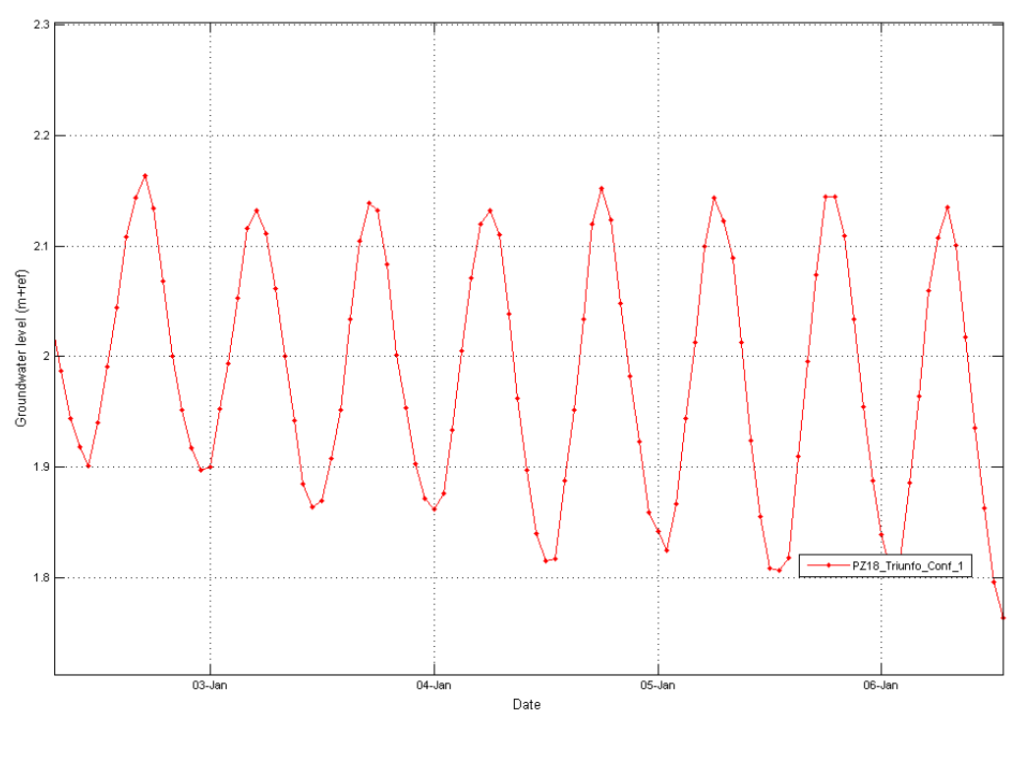
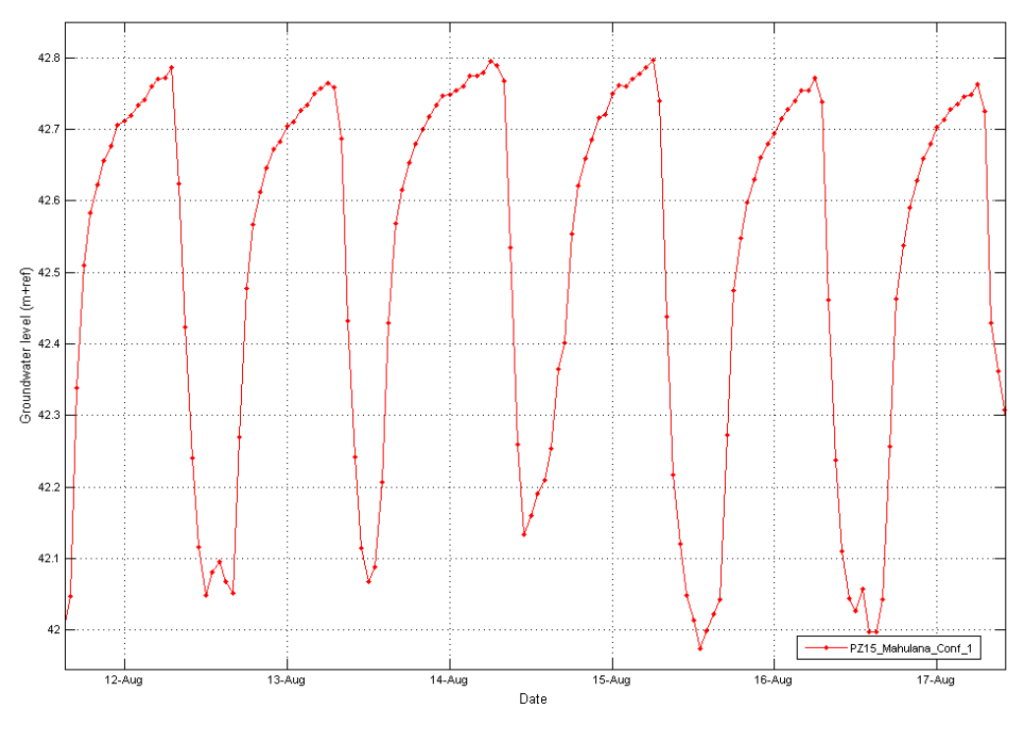
Hereunder in the left graph fluctuations in groundwater level appear twice a day. In this case, it means, the groundwater level is influenced by the tide. The right graph shows a groundwater decline at approximately 7 AM, lasting till 12 PM (only once a day). Which suggests that it’s caused by an "on-off" groundwater extraction. In addition, the water level never becomes a flat line (groundwater level at rest).

Share this article

Program Committee: ‘Respectable number of activities’

Since mid-2019, a respectable number of activities have been initiated already. Covering all components, and involving all ARA’s. That was the conclusion of the members of the Program Committee, in their meeting of March 2020 on integrated water management. In this committee, the Directors and senior staff of the Mozambican water management sector participate.

Give direction

The task of Program Committee Blue Deal is to give direction to the implementation of the program. The Committee does so, by giving advice and opinions on annual plans, reports, and results. The members of the Program Committee are the National Director of Water Resources Management, the Directors of the ARA’s and the Blue Deal Program Director. To support the members, senior staff of the sector organizations participate in the meetings and give their contributions.

Involving all ARA’s

The annual plan for 2019 was presented and discussed in the meeting on March 12th 2020, at the DNGRH office in Maputo. In this meeting, it was noted that a respectable number of activities have been initiated already, since only mid-2019. Activities covering all components of the program, and involving all ARA’s.

Outlook on 2021

During the meeting, an outlook was given on the annual activity plan for 2021. A systematic approach to sharing knowledge between the ARAs was proposed, with the involvement of the Dutch Water Authorities. Another proposal on the agenda was regarding the internal functioning of the Program Committee. All proposals were approved by the members of the committee.

Next meeting

The next meeting will be held in Pemba by mid-September 2020. The agenda of that meeting will feature the proposal for the annual plan of 2021.

Share this article

Flood risk map for land use planning

After the cyclone Idai in March 2019, ARA Centro was able to measure the maximum flood levels in the Buzi valley. Resulting in a flood risk map, that shows which areas of the river valley are at risk for such an extreme flood. This map enables necessary discussions about land use planning.

Flood risk management

Flood risk management is part of the Blue Deal project. Proper land use planning in river valleys is a must, to avoid damage by floods. Flood risk maps are crucial for discussions about land use planning.

Measure flood levels

After the extreme flood that was caused by the cyclone Idai in March 2019, flood levels were visible in the landscape of the Buzi valley. With the support of the Blue Deal project, ARA Centro measured these flood levels. A flood risk map emerged. This map shows which areas of the river valley are at risk when such an extreme flood occurs.

Initiate discussions

New discussions about land use in the Buzi Valley will be initiated. All the organizations that are responsible for land use planning, will be involved. The discussions will be based on the flood risk map that is now available.

Share this article

Improved management in the relation with water users

In 2020 all ARA’s work on improving their water users relation management, by adopting the system SIRHSenior technician Lizete Dias of ARA Sul has experienced the system for two years:“Using this system, we achieved an increase of the number of licences, and consequently a rise of invoices for the use of water -and thus the budget of the institution”.

Licence management system

In 2017, iCartoa Spanish consultancy firm and partner of Blue Deal developed the ARAs Water Licence Management System (SIRH: Utentes). SIRH is not only a database, but also a tool to improve the work processes of all the departments of ARAs that are involved in the management of information on users.

Management improvements

ARA-Sul has been using this system for two years now. Lizete Dias:“SIRH has strengthened the management capacity of the departments of ARA-Sul and the internal information flow.“ In 2020, the Blue Deal project is funding the introduction of the system at ARA-Centro and ARA Centro-Norte. Furthermore, all ARAs will be getting workshops and training on the system. ARA Sul will realize system improvements to increase work efficiency.

Information on the use of water

With SIRH also information on the use of water in space and time becomes available, which is important. Because, as Lizete Dias states: “knowledge about water demand and resource availability is the key to improve access of people and enterprises to water”.

Share this article

Sustainable water reservoirs

Small water reservoirs in local communities need proper functioning - in a sustainable way. This can be achieved with the active involvement of the local community.

Successful intervention by ARA Zambeze not only depends on the technical inputs and outputs but probably much more on its ability to connect with local people. They can provide support to the ARA with knowledge of types of water uses, site selection and hydrological and geological information. Or as Tiago Vilanculo from CCM – who successfully built 60 sand dams - stated: "Without the involvement of local people, we would not have been successful.”

Water reservoirs and dams

ARA Zambeze focuses on the construction of open-water reservoirs. In the same region, the non-governmental organisation Christian Council Mozambique (CCM) is active in constructing sand dams. Here part of the river discharge during the rainy season is stored in the sediments which are deposited upstream of the dam. The realization of new infrastructure is delayed due to time-consuming and bureaucratic contracting procedures, which may take up to 6 months while the suitable construction period is from August to November.

Represas

Carlos Fenhane is a specialist in represas (small water reservoirs constructed by a dam in the river) and within ARA Zambeze, he is the one and only expert in this field. Represas provide capacity for water storage in dry periods. In November 2019, Carlos and Martin Bos of DWA visited a selected number of represas in the region near Tete.

Guideline

Carlos expressed his need for more exchange of knowledge and experiences in other countries; in particular on the sustainability of dam construction. As Carlos stated: “I will perform better when I can use experiences and knowledge from colleagues elsewhere.” Now Carlos and Martin have drawn up a guideline and a manual for the design and construction of small dams.

During the joint field work it became obvious that the involvement of local communities in site selection, operation, and maintenance is a key factor for the sustainability of small water reservoirs.

Share this article

Solidarity after cyclon Idai

The Blue Deal project intends to start a Flood Risk unit at ARA Centro in Beira. In this Flood Risk Unit, staff will be trained to use hydrological models for better prediction of time and level of floods.

In March 2019 the Cyclone Idai caused a lot of damage to the office of ARA Centro. DWA expert Jan den Besten took the initiative to collect funds in the Netherlands to support ARA Centro in repairing the damage. Due to this quick action of the DWA partners ARA Centro managed to repair the roof and the damage inside the office before the next rainy season that started in November 2019. With a few months of delay, we are glad that our partnership can make a start with the Flood Risk Unit in 2020.

The Blue Deal effect: What impressed Jan was the mutual feeling of solidarity between the partners. To have the basic office infrastructure in place is an important condition for the staff to perform its tasks. "This was felt in the Netherlands too and I am glad that we were able to help a little bit in solving the situation caused by IDAI”, according to Jan.

The road to positive outcomes: ‘’Small contributions can lead to huge impact’’

Share this article

Awareness building in Beira

One of the partners in the Blue Deal activities in Beira is FACE Association, where Helder Domingos is in charge of our activities. Helder Domingos:“Our association was founded by colleagues who had been working within the Frisian Urban Sanitation Project (FUSP 2010-2018). Our activities have always been turned to the sanitation chain with a focus on raising awareness and building sanitation infrastructures such as improved latrines, public sanitation facilities and school sanitation. In 2018 in Beira, we were involved in the construction of a pilot faecal sludge transfer station (component 5) and in training small private companies for emptying of latrine pits. We very much welcome the opportunity provided by the Blue Deal initiative to continue with these kinds of activities which have important added value for the sustainability of infrastructures and behaviour change”.“.

At the start, FACE was involved in the various preparatory meetings with the local partners in the city of Beira, field visits, conversations with the partners and the communication meeting for the launch of the Blue Deal. The interconnection between the main actors (Municipal Council, SASB, ARA Centro, universities, private sector) with an informed community will enhance the desire to improve the individual situation for sanitation in families.

The Blue Deal effect: According to Helder: for us, to be part of this project is inspiring and as a team, we have a positive feeling as we are contributing to the sustainability of the existing sanitation environment that was created in the previous projects. We think that community education by means of awareness is important and should be constant and continuous.

The road to positive outcomes: The Blue Deal offers opportunities for improvement of behaviour about the correct management of solid waste and proper management of the drainage system at the city level impacting positively in public health.

Share this article