In Mozambique, flooding is a major threat to communities and infrastructure. In recent years, the country has experienced an increase in extreme meteorological events, which, combined with its low-lying coastal geography, has led to frequent flooding of river basins and the displacement of several communities.
To reduce the risk of flooding, Mozambique has invested in dike infrastructure along river banks and vulnerable coastal areas. These dikes act as barriers to protect communities from flooding and soil erosion.
The construction, operation and maintenance of dikes in Mozambique remains a challenge, particularly in the face of climate change-induced sea level rise and increased frequency of extreme events. Scarce resources and limited technical capacity exacerbate the problem and compromise flood management efforts.
In response to some of these challenges, the Blue Deal partnership has introduced a mixed approach to water management, integrating the development and operationalisation of early warning systems, sustainable land use planning and training in the design, operation, and maintenance of dikes.
Communities and local authorities can be prepared and respond effectively to flood events if they are informed in advance. Communicating flood risks requires the development of reliable hydrological models. Our Blue Deal partnership has developed hydrological models for the Save, Púnguè and Buzi basins. We will continue to collect data to calibrate these models and train the ARAs and DNGRH staff in using these models.
This activity is closely aligned with the work of the Flood and Drought Management Unit of DNGRH. This ensures an integrated approach to flood risk management throughout the country.
2. Land-use planning and flood risk
The most sustainable measure to reduce flood risks in vulnerable areas in the long term is good land-use planning. As land use planning is not a direct responsibility of the ARAs, it should involve other institutions that deal with this issue in Mozambique. We are therefore trying to draw the attention of these institutions to land use planning that takes flood risks into account. We are also seeking to improve communication between the ARAs, the DNGRH and all interested parties.
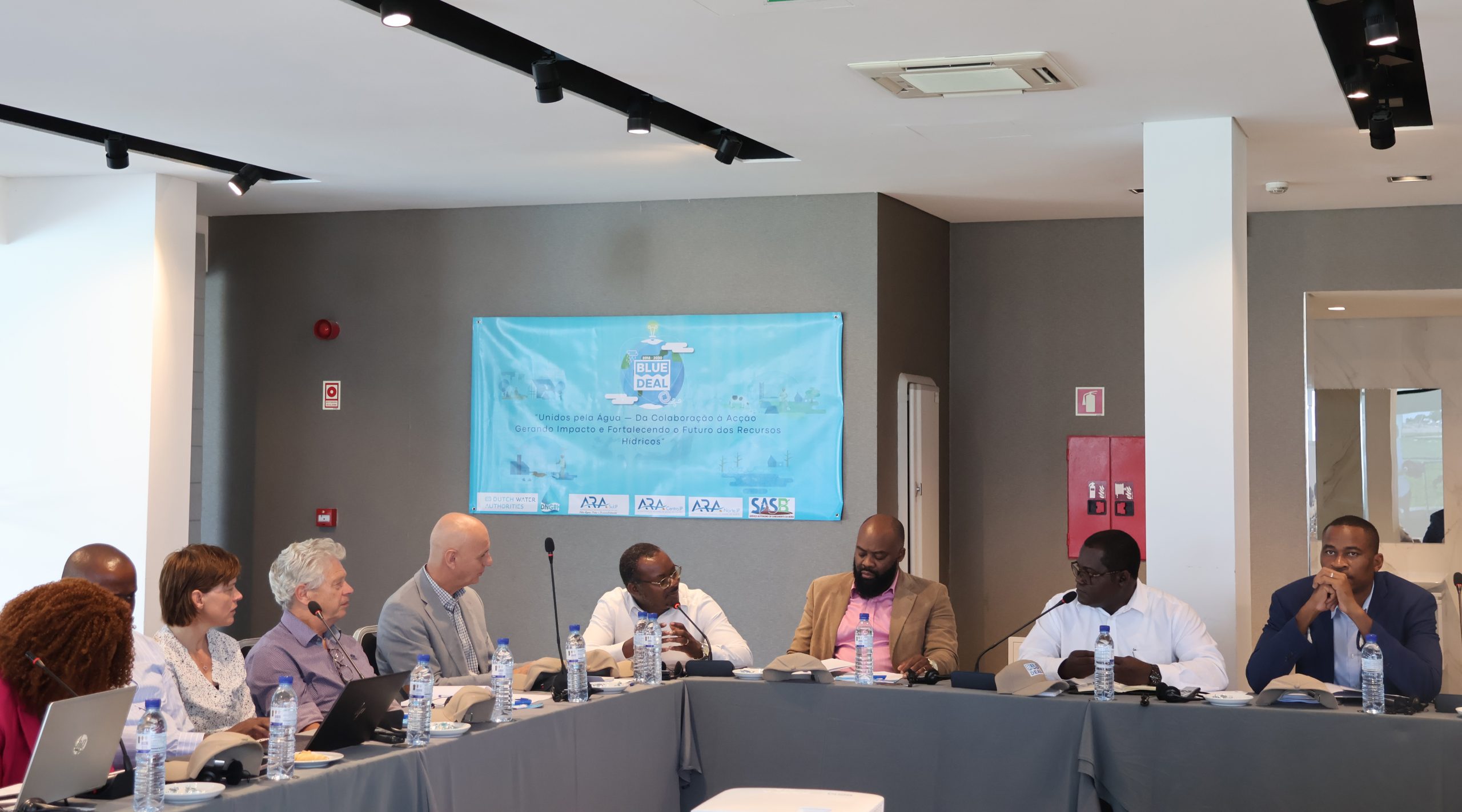
Organising multisectoral meetings and developing flood risk maps are the main activities of our partnership to reduce flood risks in Mozambique.
3. Design, Operation, and Maintenance of Dikes
Effective dike systems reduce the risk of flooding. At the design stage, dike structures have to meet several criteria related to their shape, their dimensions, the canal network and the current and future conditions for their safety. These aspects must be taken into account by the ARAs and the SASB, as these organisations are also responsible for the design, operation and maintenance of dike systems in Mozambique.
In 2019, the Mozambican government adopted a decree on the management of dikes, which, among other things, clarifies the roles of the DNGRH and the ARAs. In line with this document, a manual for the management of dikes in Mozambique was also approved in 2022.
Recognising the importance of this issue, Blue Deal Mozambique has organised training in the design and inspection of dikes. The programme also supports the introduction and use of information systems for dike maintenance. With the help of experts from the Dutch Water Authority, we are also advising on hydrological and hydraulic studies, the formulation of dike rehabilitation projects and the development of mechanisms for the payment of dike maintenance fees by the beneficiaries.