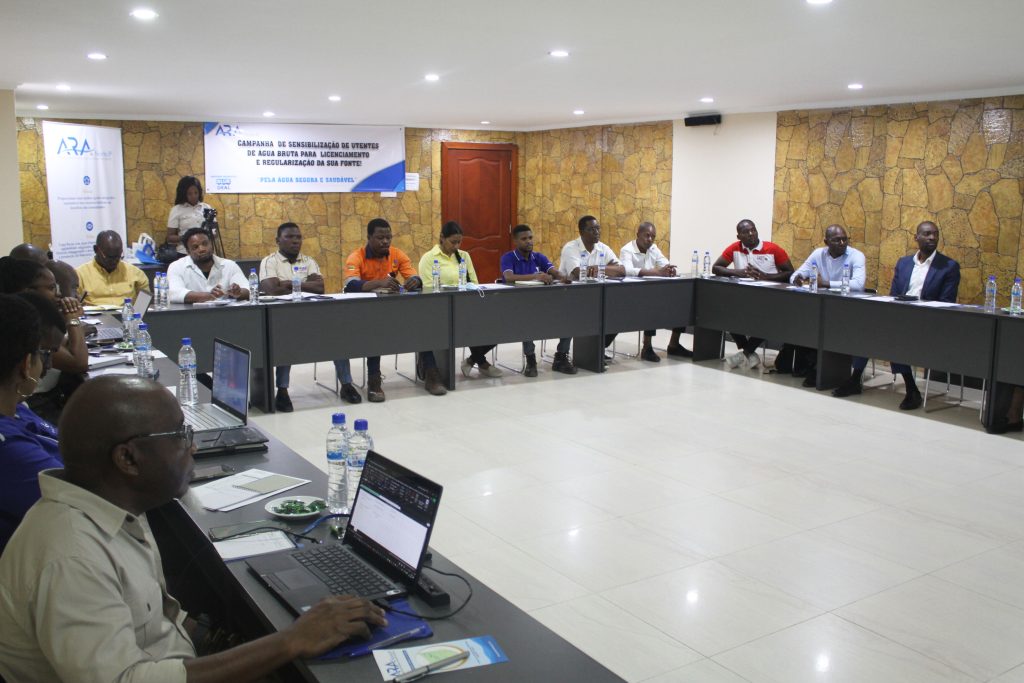
In June, technical staff from the Southern Regional Water Authority (ARA-Sul, IP) and the Northern Regional Water Authority (ARA-Norte, IP) gathered for specialised training sessions focusing on the WE-HARP tool. These sessions, supported by the Blue Deal and facilitated by FutureWater, marked a significant step forward in how water abstraction licenses are currently evaluated in these regions.
Integrating data and modelling
The WE-HARP tool is a custom-built application designed to bridge the gap between administrative data and complex hydrological modelling.
During the training sessions, participants learnt how to use this tool to link the existing Water Resources Information System (SIRHA) with the Water Evaluation and Planning (WEAP) models.They were also shown how this tool can simulate the impact of new water licence requests for agricultural, industrial or domestic use on the water balance of an entire river basin.
Water governance through data-Driven permitting
Adopting WE-HARP enables ARA-Sul and ARA-Norte to transition to a data-driven approach to water management in Southern and Northern Mozambique. This tool enables staff to calculate precise impacts of new abstractions on reservoir levels and existing users, while simulating drought scenarios to protect environmental flows and water supply.
By automating complex processes, this tool allows even non-experts at the two ARAs to carry out in-depth assessments and clearly communicate their decisions to stakeholders.
Securing water for tomorrow
The WE-HARP training in June 2025 marks a significant step towards modernising water licensing by ARA-Sul and ARA Norte. By incorporating the WE-HARP tool into their daily operations, the Water Resources Departments of both ARAs are now better positioned to balance increasing water demands with environmental sustainability, thus ensuring a secure water supply in the future.
Effective water management is a global challenge that requires a combination of local expertise and international cooperation. In Mozambique, a country that is vulnerable to both floods and droughts, strengthening the technical capacity of water boards and communities is key to finding a solution to these issues.
As part of the Blue Deal programme in Mozambique, two vital Communities of Practice (CoPs) have been meeting regularly to exchange knowledge and develop skills in water conservation and dike management. This year, the two CoPs, comprising professionals from ARA-Sul,IP, ARA-Centro,IP,ARA-Norte,IP, DNGRH and ISPS , came together for two important occasions: a collaborative meeting in Tete and a working visit to the Netherlands.
From online meetings to gaining on-the-ground knowledge
Early in April, the combined CoPs held a three-day working session in Tete, focusing mostly on the practical realities of water conservation infrastructure in Mozambique.
The sessions were dominated by the experiences of ISPS in building sand dams and the “10,000 Small Dams” initiative of the Mozambican government, which is being implemented by the three ARAs.
The CoPs brainstormed strategies to standardise the development of these small dams and reservoirs, emphasising that these structures cannot be built in isolation. Previous construction projects have shown that strong local community involvement, particularly from women, is important at every stage - from site selection to maintenance. This ensures that these structures meet real needs and have a long lifespan.
Tasks such as creating a centralised database of small dams, developing construction manuals, and organizing training programmes for the local committees responsible for maintaining these structures, among other things, were established as priorities by the CoPs at the end of this meeting.
This collaborative work, alongside previous dike management and water conservation actions under the Blue Deal partnership in Mozambique, culminated in members of the CoPs visiting the Netherlands in June to learn more about water management in practical terms.
Learning from Dutch Water Experts
In June, a delegation of Mozambican water professionals visited the Netherlands. The aim of the visit was to learn how a country that is known for laying below sea level manages its flood defences and water retention.
The visit was an eye-opener regarding dike management. The Mozambican team was particularly impressed by the Dutch institutional model. They found out that, unlike in Mozambique, where maintenance is sometimes outsourced or non-existent, the Dutch Water Authorities often have dedicated in-house units with their own equipment and personnel. Furthermore, the concept of “beneficiary contribution”, whereby all residents pay a tax specifically for dike maintenance, sparked discussions on how similar financial mechanisms could be adapted in Mozambique.
From a technical perspective, the delegation visited the renowned Dutch sea dikes, where the use of specific vegetation and sheep grazing as a cost-effective, nature-based solution for maintaining grass cover on the slopes, was particularly impressive. The team also received training in using drones for cross-sectional profiling and volume calculations. This is an essential skill for modernising the way Mozambique monitors its dikes.
In terms of water conservation, the group explored techniques to increase groundwater infiltration and reduce surface runoff. The programme also included visits to pumping stations, ecological restoration projects and the “Baakse Beek”, with the aim of finding out how the Netherlands manages water availability during periods of drought, which is an increasingly important issue even in its humid climate.
Looking Ahead
The combination of the Tete meeting and the interchange in the Netherlands outlined a clear path for the coming years.
All Mozambican partners returned with concrete action plans, including establishing dike maintenance units, mapping beneficiaries for potential co-funding, developing annual bulletins about dike conditions, creating a national database of dikes and small dams, and fostering scientific research on these structures, among other things.
The Blue Deal partnership in Mozambique will continue to collaborate closely with these organisations as these actions are carried out through the coming years.
In April 2025, a delegation of water quality experts visited Mozambique to continue collaborating on water quality subjects under the Blue Deal partnership. During this mission, Oscar van Zanten, Eva Ruiter, and Jan van de Graaf focused on several key goals.
The delegation evaluated the progress of the water quality blended learning approach. They also looked at the introduction of innovative practices for water quality testing. Finally, they discussed the implementation of water quality management regulations.
Expanding water quality knowledge through blended learning
In previous years, the Blue Deal partnership introduced an e-learning course on water quality monitoring. This working visit served as an opportunity to evaluate the first phase of the online course and launch its second phase. The course has now been expanded to include a new module on aquatic ecosystems and biodiversity, and a final test. A personalised certificate is automatically generated if the student answers more than 70% of the questions correctly.
During the visit to ARA-Sul,IP in Maputo and ARA-Centro,IP in Tete, a short introductory course on ecology supported the introduction of the second phase of blended learning - an approach that is contributing to the development of a strong base of technical capacity within the ARAs. During a meeting with Bernabé Fondo (Freshwater Program Manager) and Antonio Serra (Landscape designer) of the World Wide Fund for Nature ( WWF), the e-learning course was also introduced to them. They responded very enthusiastically and will use the e-learning course to train WWF staff.
Introducing innovative techniques for water quality monitoring
A further goal for this visit was to test new tools for water quality monitoring in the field.
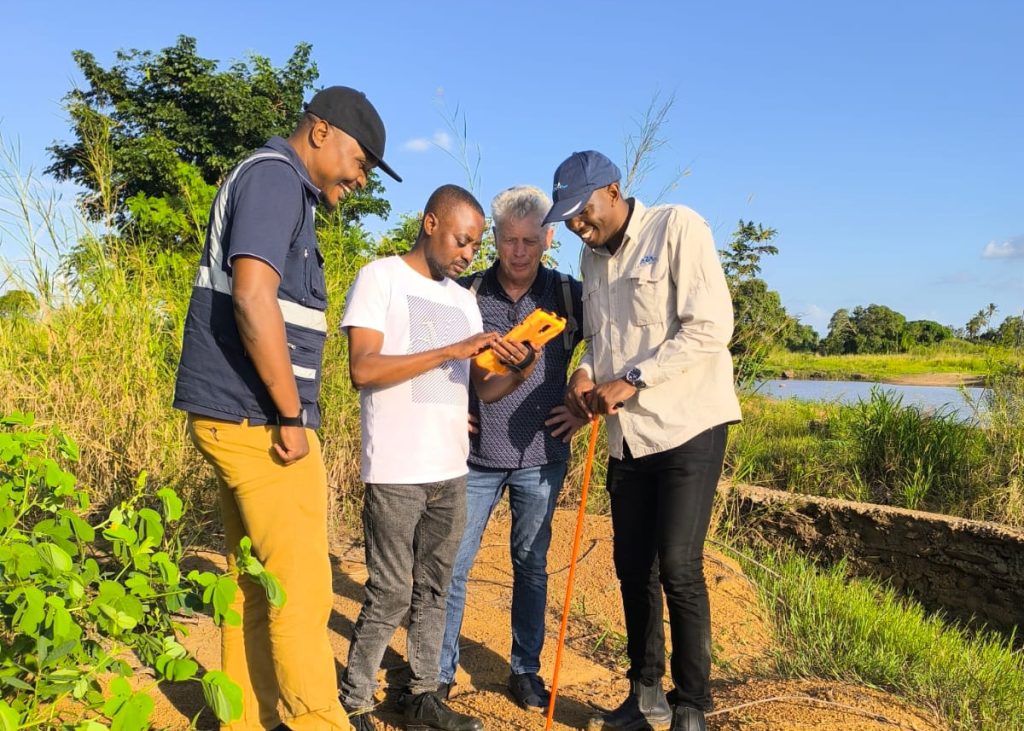
As part of ongoing efforts, in the last quarter of 2024, the Dutch Water Authorities ( DWA) provided ARA- Centro, IP with simple, low-cost handheld meters. During a field trip to the Zambezi River, ARA-Centro, IP used these devices to assess their usability in combination with the smartphone app Aquality. Further information can be found here.
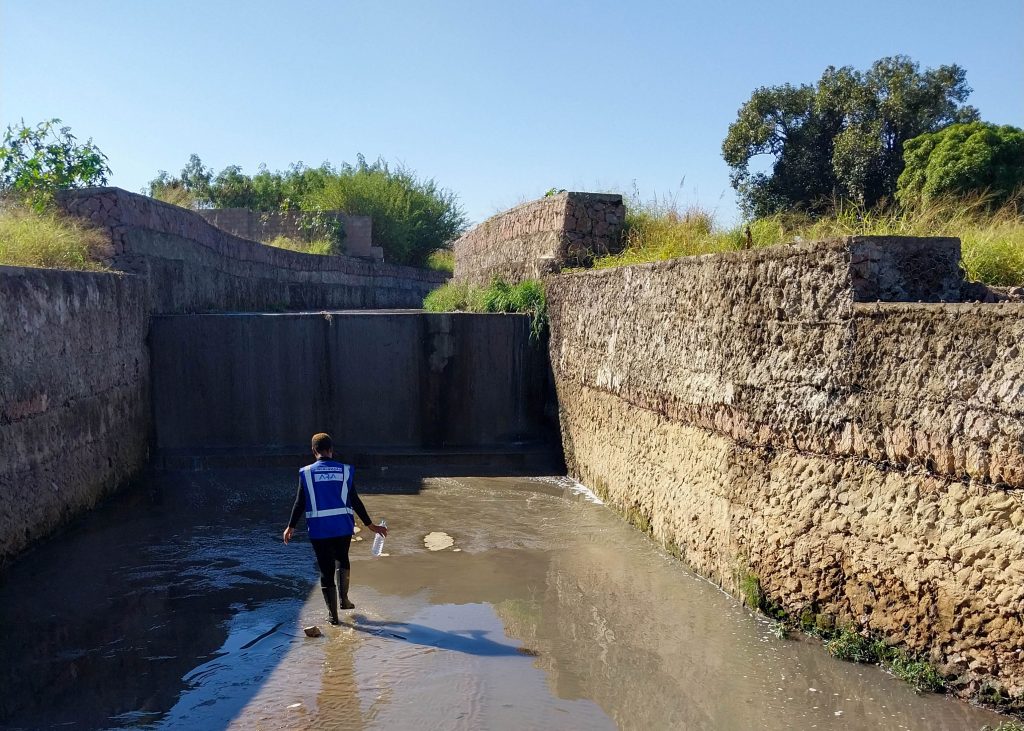
With many monitoring sites located in remote areas and poor road access in the country, transporting water samples for analysis is often impractical. Limited laboratory capacity exacerbates this problem. In these cases, portable hand-held meters can provide reliable readings and provide an effective alternative for collecting data in addition to the laboratory analyses.
Wastewater discharge and the polluter pays principle
In Maputo, the Dutch team met with teams from ARA Sul, IP andDNGRH. Discussions with these two organisations focused on the implementation of Decree 52/2023, which regulates water quality standards and wastewater discharge. Technical inspections and pilot enforcement actions by ARA- Sul, IP have shown that there are challenges in applying this regulation, especially the polluter pays principle. This calls for urgent discussions between the ARAs and the DNGRH on this issue and a possible revision of the decree.
DNGRH is working on a proposal for water tariffs and has requested DWA to give more support. The new proposal will then be submitted to the Cabinet.
Strengthening water data management
The visit also covered water data management, with a particular focus on the development of SNIRH (National System of Information on National Water Resources) and the implementation of HydroNET. Further discussions on data management and visualisation will be conducted and harmonised between the different themes within the partnership.
Other activities related to water quality
As part of the Water Quality component, the Blue Deal Mozambique is working to address water pollution from gold mining in the Buzi and Pungwe river basins. Since 2023, stakeholder meetings have been organised to facilitate collaboration between ARA Centro and other government agencies, farmers, and miners. These discussions have led to the ongoing development of an action plan, focused on licensing companies and monitoring wastewater discharge, raising mining operators' awareness, and strengthening the integrated multisectoral management of the Buzi and Pungwe river basins. We're planning to keep working on this issue with a working visit and a live stakeholder meeting in August this year.
Through the Blue Deal partnership, the Dutch Water Authorities have actively supported Mozambique's regional water authorities in improving dike management practices. This cooperation has included technical training on dike design, construction and repair, and the introduction of tools for visual dike inspection and monitoring. Based on this work, the partnership has moved on to field inspections of selected dike systems. This work started with ARA-Sul,IP and was recently extended to ARA-Centro,IP and ARA-Norte,IP, marking an important step in strengthening Mozambique's flood protection infrastructure.
Visual inspection of two major flood protection systems
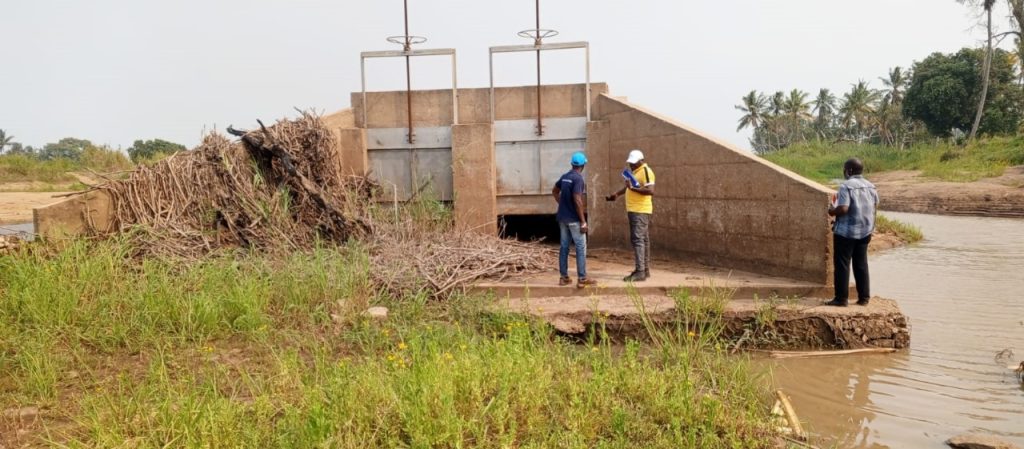
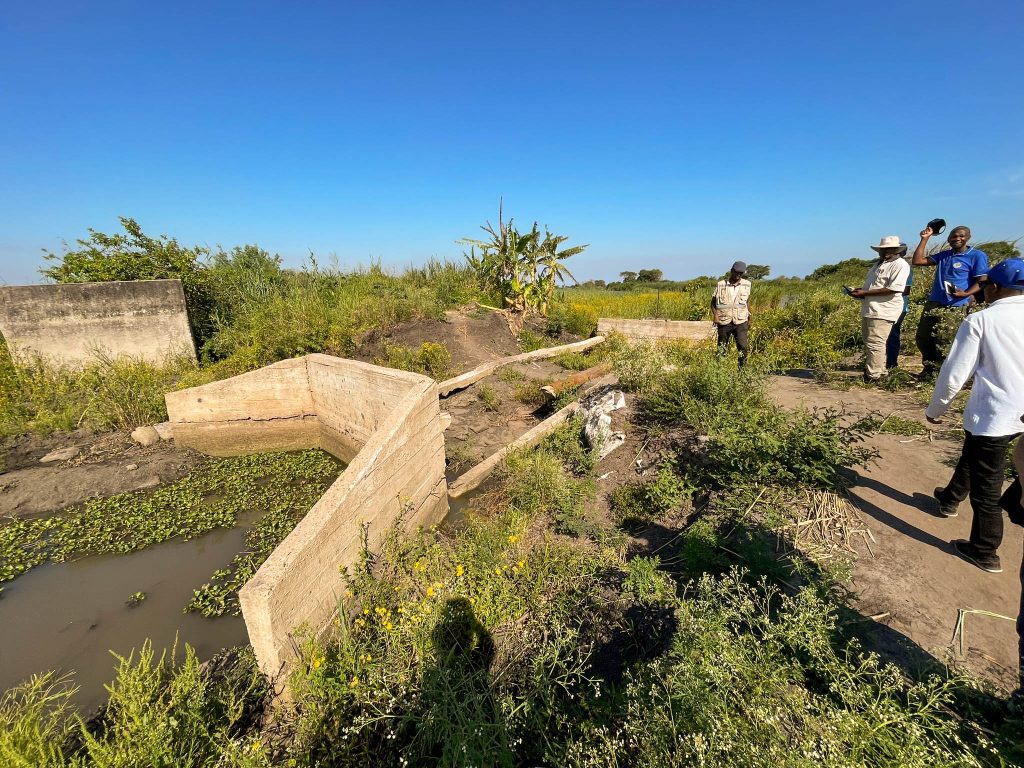
In October 2024, ARA Norte,IP conducted a visual inspection of the dike of Nante, while ARA Centro,IP carried out a similar work on the dike of Luabo in March this year. Both assessments confirmed a significant deterioration in the structural condition of these flood defence systems, which requires urgent intervention.
ARA Norte’s inspection revealed widespread issues in the 19-kilometre dike of Nante, including severe erosion, deep cracks, collapsed sections, and malfunctioning hydraulic structures. On the other hand, ARA Centro’s inspection of the 64-kilometre dike of Luabo also revealed serious structural weaknesses, including cracks and gullies, excessive vegetation and large trees on the dike, buildings on top of the dike and the presence of other risky human activities.
Repeated failures due to lack of maintenance
The latest findings confirm that inadequate maintenance has left these structures vulnerable. Despite previous rehabilitation attempts, key segments of Nante’s dike continue to fail during major weather events, leaving surrounding communities and agricultural lands at risk, as past floods in 2015, 2019, and 2022 have shown.
The dike of Luabo is in an even worse state. This dike was originally built to protect the village of Luabo and the sugarcane fields nearby. However, it has not undergone any maintenance since the local sugar factory closed more than 15 years ago.
Moving forward to address the structural issues
Following these inspections, both ARAs will develop maintenance plans for these dike systems, with support from DWA dike experts. The reconstruction of the dike of Nante will begin in the near future. The financial support for this work has been secured by ARA Norte,IP as part of a programme funded by the World Bank. On the other hand, ARA Centro,IP has no clear preparations for the reconstruction of the Luabo dike.
Next steps and strategic Importance
Dike systems play a vital role in safeguarding livelihoods and reducing flood risks. These inspections are part of a coordinated strategy to increase Mozambique’s resilience to climate change by strengthening key infrastructure. The Blue Deal partnership will continue working with the ARAs and the National Directorate of Water Resources in developing practical solutions for inspecting and monitoring dike systems, developing maintenance plans, and providing advice, as needed, in large-scale interventions from other initiatives.
More about component 4
Dike training and visual inspections are an essential part of the Blue Deal's flood risk management component in Mozambique. This component is also working on other issues such as the involvement of communities in the operation and maintenance of dikes, the development of flood risk maps, the development and use of hydrological models, land use planning and flood risks, among others.
Under the partnership with SASB, FACE Association carried out a manual drainage and canal cleaning campaign to strengthen flood prevention measures in the city of Beira. This proactive effort aimed to minimise the risk of flooding ahead of the 2024/2025 rainy season.
Improving Urban Resilience
Between September 2024 and January 2025, over 19 kilometres of drainage ditches were cleaned, and 26 critical drainage points were unblocked. These efforts have significantly improved water flow in flood-prone neighbourhoods across the city.
In direct support of Beira's commitment to urban resilience and climate adaptation, this activity helped improve the drainage system and reduce the risk of flooding, protecting infrastructure and improving the living conditions of citizens.
Social Inclusion and improved quality of life
In addition to infrastructure improvements, the campaign created temporary job opportunities and encouraged community participation in urban water management and sanitation. Residents from critical neighbourhoods participated in the cleaning campaigns and awareness-raising sessions on waste management.
These efforts also support the local commitment to public health by reducing wastewater accumulation and associated health hazards.
Looking Ahead
The FACE Association's efforts help to achieve the partnership's long-term goals. Under the Blue Deal programme and other initiatives, FACE will continue with routine maintenance and awareness campaigns with support from local authorities. These efforts will encourage people to dispose of their waste properly and help to prevent urban flooding, as the city of Beira is frequently affected by heavy rains.
In Mozambique, the regional water authorities (ARAs) are undertaking impactful water licensing campaigns with support from the Blue Deal program. These campaigns aim to promote sustainable water use, regulatory compliance, fair access across key river basins, and improve ARAs financial sustainability.
In the footsteps of ARA-Sul, IP, ARA-Norte, IP and ARA-Centro,IP started launching targeted communication campaigns designed not just to inform about their duties and responsibilities but to inspire water users to get licensed and pay for the exploitation of water.
Direct engagement with water users and the development of trust
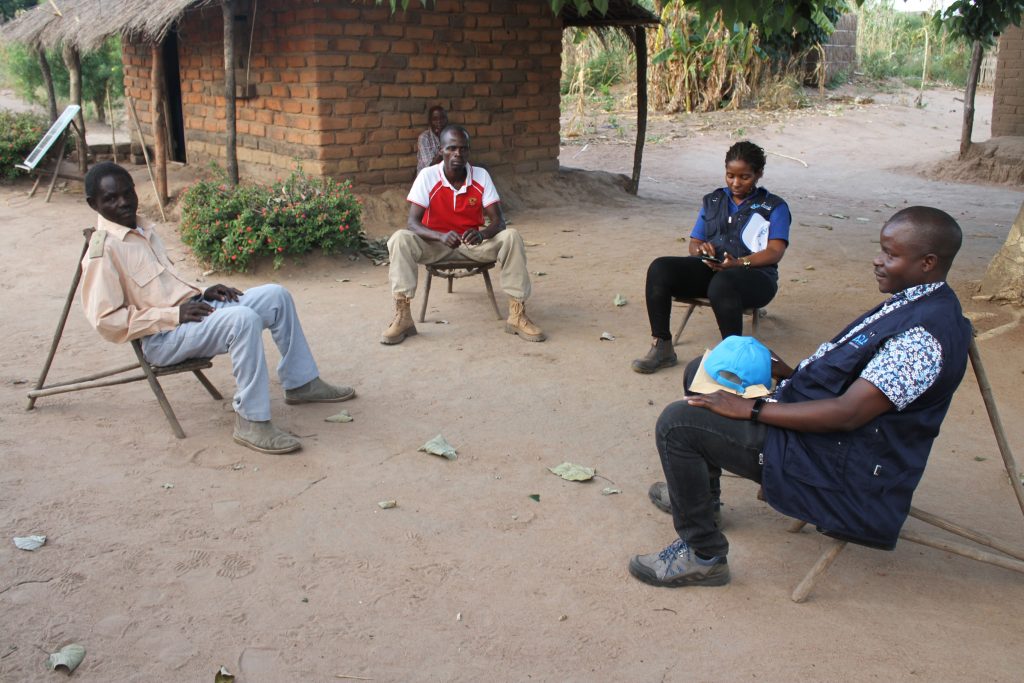
Focused on promoting “Safe and Healthy Water”, ARA Norte’s campaign focused on visiting farmers, industrial users, and private water providers to answer their questions, explain their legal obligations, and help them register on the spot. Supported by radio, TV, and community meetings, this hands-on approach built trust and led to a significant increase in licensing applications and compliance.
On the other hand, also aiming at behavioural change, ARA Centro,IP turned to radio campaigns to call for the licensing of water users in the three river basins under its authority and promote a better understanding of the ARAs' role.
Inclusive water management
It is estimated that the ARA Norte,IP and ARA Centro,IP campaigns reached well over 500,000 people across the river basins under their management. These campaigns broke down language barriers and social exclusion, with messages delivered through face-to-face interactions, radio and TV, in both the official language (Portuguese) and local dialects.
Expanded understanding of water governance and the road ahead
These campaigns prompted the need for increased engagement with communities and led to the application of new water users, who started to see the water licensing process not as bureaucracy, but as a necessary action to ensure its sustainable exploitation.
Developing deeper community partnerships to support inclusive water governance and further identification of water users are key activities for ARAs Customer Service Departments. The Blue Deal partnership will continue working on these subjects with the ARAs, as they plan to carry on their communication activities and direct outreach for this year.
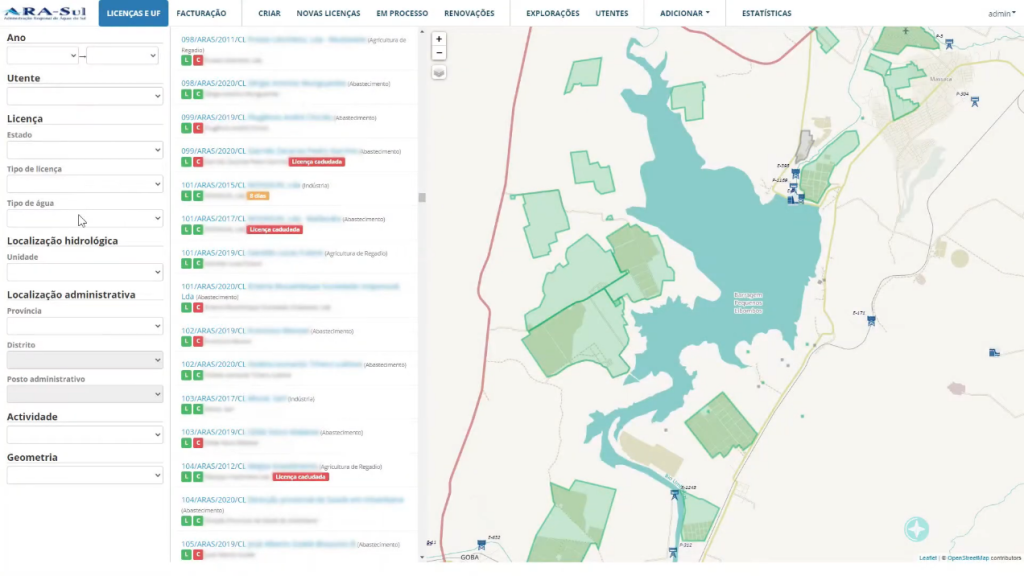
The introduction of SIRHA, a digital water users information system developed by iCarto with support from Blue Deal and Galician Cooperation, has transformed the way Mozambican water authorities track water consumption, issue licences, and effectively engage with water users.
In this video, Teodomiro Cabral explains how ARA-Sul,IPis using the tool to automate processes across their different departments.
As part of the Blue Deal partnership, Mozambican water authorities (ARAs) were trained in WEAP and HydroNET. Integrated into the GLOW project, these tools support real-time forecasting, scenario planning and improved responses to drought and flood risks.
In the video, Ernesto Tivane and David Mucambe, from ARA-Sul,IP, explain how these critical tools for data-driven water management are enabling local water authorities to anticipate and respond to droughts, floods and growing water demands.
One of the critical areas addressed by the Blue Deal Partnership in Mozambique is flood protection.
With an increase in severe weather events, dike systems are essential in Mozambique's battle against flood damage. Through training, technology, and collaborative effort, Mozambique's Water Management Agencies (ARAs) are gradually improving their ability to manage dike systems and protect communities against flooding.
Building Capacity and Introducing New Tools
Since Phase 1, the Blue Deal partnership has been addressing flood prevention topics in Mozambique. By the end of Phase 1 (2019 - 2022), there was a growing interest within Mozambique's Regional Water Authorities (ARAs) and the National Directorate for Water Resources Management (DNGRH) to improve the capacity of these organisations to design and manage dike systems.
In Phase 1, Dutch Water Authorities DWA dike experts conducted a dike management training for ARA-Sul and introduced a GIS-based dike inspection software(QField).Armed with new knowledge and technology, ARA-Sul inspected the dikes along the Limpopo and Incomati rivers. These inspections revealed many issues, including erosion, unauthorised construction, overgrown vegetation, and structural wear. These findings underlined the need for meticulous rehabilitation and maintenance plans to ensure the continued safety of these dikes.
Using QGIS, ARA Sul processed the dike inspection data collected and created detailed maps that were later used to develop a management plan for these dike systems.
Expanding Training Across Regions
The work developed with ARA Sul proved to be important for the other ARAs. As the need for robust dike management became apparent, the Blue Deal initiative extended its training programmes to ARA-Centro,IP and ARA-Norte,IP.
Last year, the three ARAs and the DNGRH started discussing collectively strategies for dike maintenance, best practices for dike design, and dike regulations.
In May 2024, two training in dike management were organized for ARA Centro and ARA Norte. The first training consisted of a one-week introduction to dike design and rehabilitation, led by Tecnica Engenheiros Consultores,Lda - a Mozambican consultancy firm. The second training consisted of practical training in dike inspection and data processing, conducted by DWA dike experts.
A call for urgent actions
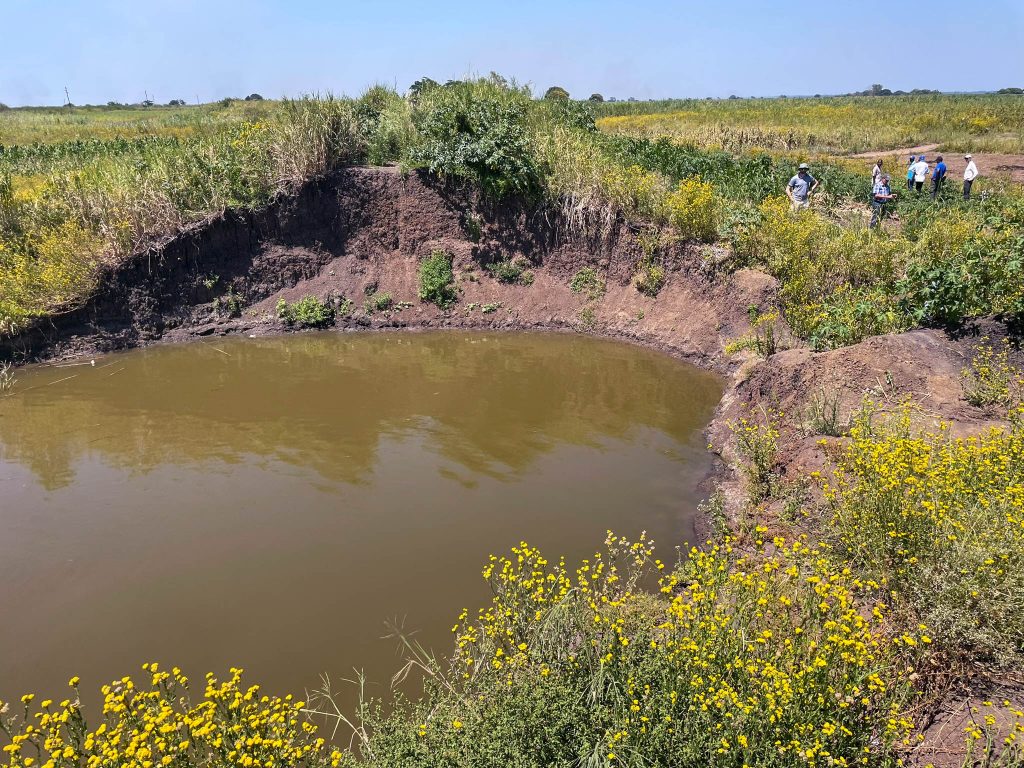
The two training organized this year were a blend of theory and practical field visits. The team visited the Nante dike system along the Licungo River to practice dike inspection in the field. They also visited a dike breach near an irrigation pumping station (Muziva). The breaches in this last dike and other dike systems in Mozambique highlight that good dike maintenance is urgently needed in the country.
Collaborative Efforts and Knowledge Sharing
The training and inspection processes were not only about acquiring new skills but also about sharing experiences and best practices. During this year's training for ARA Norte and ARA Centro, an expert from ARA Sul shared their findings from the 2022 dike inspections along the Limpopo and Incomati rivers. This knowledge transfer is essential as ARA Norte and ARA Centro prepare to inspect their dike systems and develop their management plans.
In recent years, wastewater discharge and its impact on water quality has been an ongoing concern for the ARAs and other environmental organisations in Mozambique. Through the Blue Deal partnership, a significant breakthrough was achieved when representatives of key organisations - ARAs (Mozambique's Water Management Agencies), DNGRH (National Directorate of Water Resources Management), MTA (Ministry of Land and Environment) and AQUA (Agency for Environmental Quality Control) - came together in a series of online and live meetings to discuss this issue.
The collaborative effort resulted in the finalisation and approval of a comprehensive checklist and guidelines for the licensing of effluent discharge at the beginning of 2024. This is a crucial step in the ongoing mission of improving water quality in Mozambique through effective regulation and enforcement of wastewater discharge.
Pilot licensing of effluent discharge
Following the approval of these critical tools, the focus in 2024 has shifted toward the validation and implementation phase. The ARAs are now engaged in pilot projects to validate the usability of these tools and foster institutional collaboration.
The ongoing efforts of the ARAs and other stakeholders also demonstrate a commitment to continue developing innovative strategies to further improve the licensing process and shorten the time taken.
Increasing cooperation and collaboration
The checklist and guidelines are essential tools for improving collaboration and cooperation between the ARAs and the organizations involved in the licensing and enforcement processes. By clearly outlining the steps and requirements for wastewater discharge, it's expected that these tools make the regulatory process more efficient. Collectively, these organisations are not only improving the capacity for effective enforcement but also driving a meaningful impact on improving water quality in Mozambique.